The Physics of GSM: Why Fabric Weight Signals Quality
If you have ever picked up two baby garments that looked almost identical, yet one felt noticeably more substantial in the hand, you have already felt the difference GSM makes. GSM is one of those quiet quality signals that rarely appears on a hangtag but tells you a great deal about how a garment will feel, wear, and last. As parents choose the pieces that fill a nursery drawer, understanding this simple measure helps separate a thin, short-lived garment from one with real substance. Within the intentional lifestyle persona of GLYN & CO., we think of fabric weight as a marker of quality and comfort, not a gimmick, and this guide explains what GSM is, why it matters, and how we use it in our pieces.
So what is GSM? The abbreviation stands for grams per square metre, and it simply measures how much a fabric weighs for a given area. A higher number means a denser, more substantial fabric; a lower number means a thinner, lighter one. GSM is shaped by the yarn, the spinning, and how tightly the knit loops are constructed. A very low-weight knit, below roughly 150 GSM, tends to feel thin and can be quite sheer, while a more substantial weight feels fuller and more structured in the hand. It is a practical, honest way to gauge the substance of a fabric.
Where does GLYN & CO. sit? Our foundational essentials use a premium 180 GSM cotton, a considered mid-to-substantial weight chosen deliberately. It is heavy enough to feel substantial, structured, and comfortably warm, while still being soft and breathable for a baby to wear comfortably. We are precise about this number because honesty about specifications is part of how we describe our pieces, and 180 GSM is the genuine weight of our core cotton rib.
The first thing a good fabric weight gives you is durability. A denser fabric simply has more to it, which helps a garment hold its shape and resist the thinning, bagging, and sagging that thin knits show after repeated washing. A substantial cotton also tends to resist surface pilling better over time. This is part of why our signature curated rompers are designed to keep their structure and softness wash after wash, the kind of lasting quality that lets a well-made piece be passed gently between siblings rather than worn out in a season.
A considered weight also contributes to how a garment drapes and holds its shape. A substantial fabric sits beautifully, keeping a clean, tailored silhouette rather than clinging or going limp. It is part of what gives a simple romper an elevated, put-together look, structure that comes from the quality of the fabric itself rather than from stiff chemical finishes. That quiet sense of substance is, to us, what quality feels like in the hand.
It also helps to understand why a soft, comfortable fabric matters so much for a baby in particular. A newborn's skin is gentler and more delicate than an adult's. As confirmed in clinical histological studies of infant epidermis development, the outer layer of newborn skin is less developed than a mature adult's, with skin cells that are smaller and arranged less tightly together. Because this outer layer is more delicate in early infancy, a soft, smooth, well-made fabric is a thoughtful choice for the layer closest to your baby.
The outer layer of the skin also acts as its natural surface barrier. As explored in peer-reviewed research on neonatal skin barrier function, infant skin tends to lose water more readily than mature adult tissue because its protective layers are still developing. A soft, breathable, comfortable fabric is gentle against this developing barrier, which is part of why the quality and feel of a fabric, GSM included, is worth a moment's thought.
Fabric weight also relates to comfortable warmth, which is a genuine consideration because newborns have a limited ability to regulate their own temperature and cannot yet shiver to generate warmth. As discussed in clinical guidance on the physiological mechanics of newborn thermoregulation, and in clinical data regarding neonatal skin physiology and thermal dynamics, a comfortable, breathable layer is a real help. A substantial fabric naturally holds a little more gentle warmth than a wispy one, while a breathable cotton still lets humidity escape, so a baby can stay comfortably cosy without overheating. As always, dressing for the room temperature and following safe-sleep guidance is the best practice.
The way our fabric is built supports both comfort and breathability. The rib knit alternates face loops and purl loops in vertical columns, creating a gently textured surface with small air channels rather than a flat, solid sheet. Those channels let the fabric breathe, so the substantial weight gives comfort and gentle warmth without feeling stuffy. The gentle air pockets within the knit act as a natural, breathable insulator, keeping a baby comfortable as the room warms and cools.
That same rib structure gives comfortable stretch through its geometry rather than a high proportion of synthetic elastic. The vertical columns expand and recover like a gentle accordion, flexing with your baby's movements without rigid pressure points and settling back into shape afterward. This natural mechanical stretch keeps the fit comfortable and self-adjusting as your baby grows, while keeping the fabric soft and breathable against the skin.
Independent testing sits quietly underneath all of this. Our current collections are certified to OEKO-TEX® Standard 100, Class I, the strictest tier of the standard, which sets the lowest limit values for substances of concern in items intended for babies, and considers the components of the finished garment, including the base fabric and sewing threads. We describe our pieces honestly, which means we do not call our current cotton stock organic, and we do not claim our garments use materials they do not contain.
Looking ahead, our newly launched Canvas Collection introduces a custom-developed fabric of 95% bamboo viscose and 5% spandex, knit into a heavy-density 230 GSM interlock, a deliberately substantial weight that gives the Canvas pieces a lovely structured drape and softness. Bamboo viscose is a plant-derived fibre prized for its softness and fluid drape, and the small amount of spandex gives the garment shape retention and recovery for daily active wear. Like the rest of our range, the Canvas Collection is certified to OEKO-TEX® Standard 100, Class I, and we always describe its fabric accurately as bamboo viscose. For more on the thinking behind our materials, exploring the archive of The GLYN Journal offers a closer look.
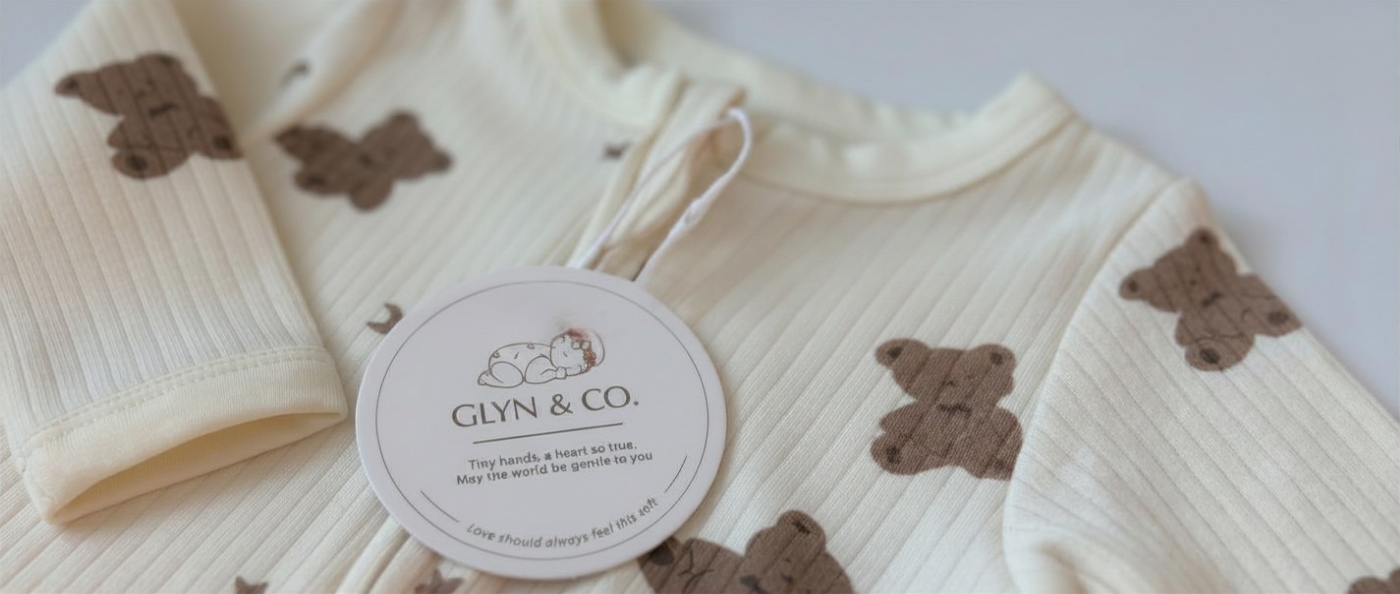
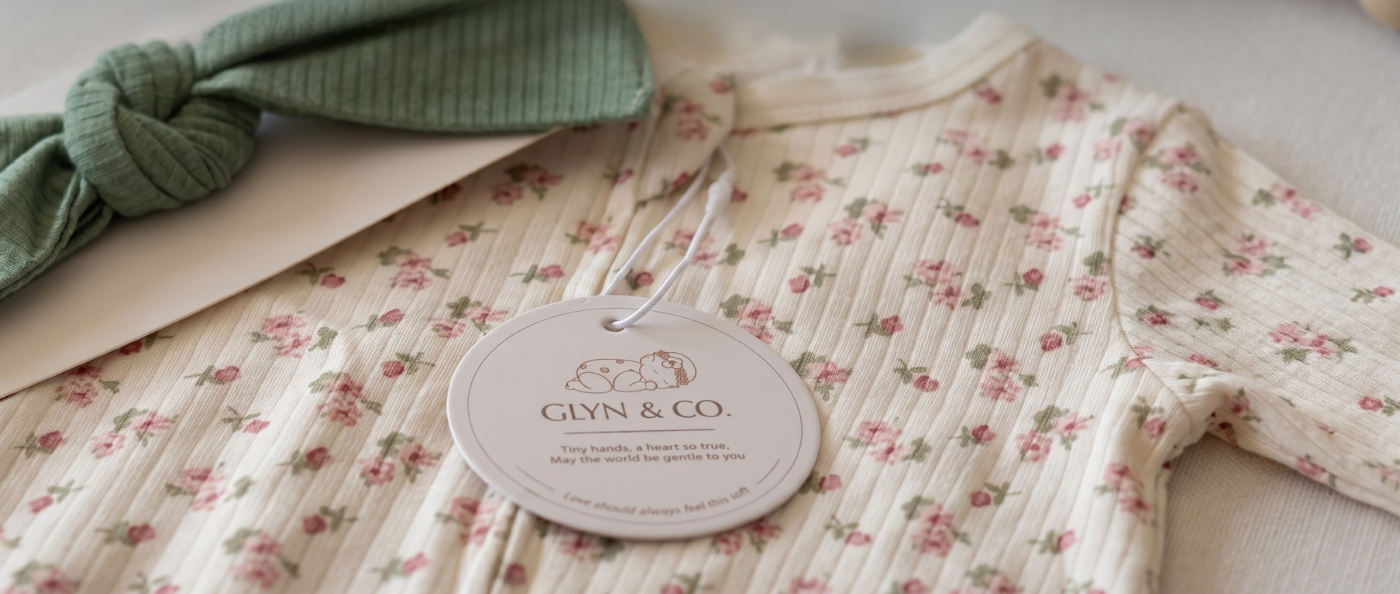
The pristine Velvet Heart Romper shows this thinking in a single piece: a substantial 180 GSM cotton rib that keeps its structure and softness through many washes, certified to OEKO-TEX® Standard 100, Class I. Our signature heirloom Vintage Bloom Romper carries the same considered weight and quality, built to hold its shape and feel lovely wear after wear. In the end, GSM is simply one honest way to recognise a fabric with real substance, and substance is what makes a piece worth keeping.
Understanding GSM in Baby Clothing
| Property | What GSM Tells You | Parent Peace of Mind Implication |
|---|---|---|
| What GSM Is | Grams per square metre, a measure of how much a fabric weighs for a given area; higher means denser and more substantial. | A simple, honest way to gauge the substance of a fabric. |
| Durability | A substantial weight helps a garment hold its shape and resist thinning, bagging, and pilling over time. | Pieces that last and can be passed gently between siblings. |
| Drape & Look | A denser fabric keeps a clean, tailored silhouette rather than clinging or going limp. | An elevated, put-together look from the fabric itself, not stiff finishes. |
| Comfortable Warmth | A substantial, breathable knit holds a little more gentle warmth while still letting humidity escape. | Cosy comfort without feeling stuffy, alongside safe-sleep dressing. |
| GLYN & CO. Weights | 180 GSM cotton essentials and a 230 GSM bamboo viscose Canvas interlock, both certified to OEKO-TEX® Standard 100, Class I. | Substantial, considered fabrics, with weights described honestly. |
Quick Answers
What is GSM in baby clothing, and why does it matter?
GSM means grams per square metre, a measure of how much a fabric weighs for a given area. A higher GSM means a denser, more substantial fabric, which generally feels fuller, holds its shape and softness longer, and offers comfortable, gentle warmth.
- A quality signal: GSM is a simple, honest way to gauge how substantial and durable a fabric is, separating a thin knit from one with real substance.
- Durability and drape: A substantial weight helps a garment resist thinning and bagging and keep a clean, tailored silhouette wash after wash.
- GLYN & CO. weights: Our cotton essentials are a substantial 180 GSM and our Canvas pieces a heavy-density 230 GSM, both certified to OEKO-TEX® Standard 100, Class I.
A Closing Note from GLYN & CO.
GSM is a small detail, but it is the kind of small detail that tells you whether a garment was made with care. We believe the early months of your baby's life are a precious, fleeting window, and the pieces you choose deserve real substance, fabric that feels lovely and lasts. Choosing a considered weight is one of the quiet ways we try to make that easy.
The philosophy of GLYN & CO. is an invitation to slow down and trust your own sense of what feels right for your family. You bring a quiet wisdom to caring for your child, one that values lasting quality and honest design over passing trends. Wrapping your baby in our certified cotton essentials offers a soft, breathable, independently tested layer in calm, neutral tones. Let us welcome the quiet luxury of intentional design, and create a peaceful space where comfort and calm come first.