Wrinkle-Free Finishes, and Why We Finish Our Fabric Gently
Walk down any clothing aisle and you will see reassuring words on the labels: wrinkle-free, easy-care, non-iron, stain-resistant. For a busy parent, these sound genuinely helpful, and there is nothing wrong with wanting laundry to be simpler. But it is worth understanding what those labels often describe, because some of these properties come from chemical finishes applied to the fabric, and at GLYN & CO. we have chosen a different path. Within the intentional lifestyle persona of GLYN & CO., we prefer to finish our fabric gently and let its natural quality speak. This guide explains, plainly, what these finishes are, why we choose not to use them, and how we keep our garments holding their shape another way.
Let us start with the simple version. Some fabrics are given a chemical finish to help them resist wrinkles or keep a pressed look. These finishes work by treating the fibres so they hold a flat shape. It is a common, established practice across much of the apparel industry, and it is how a lot of clothing earns an easy-care label. We are not here to alarm anyone about it; we simply make a different choice for our pieces, and we like to be transparent about that choice.
Our preference is to keep our finishing gentle and let the fabric's own quality do the work. Rather than relying on chemical wrinkle-resist treatments, we finish our cotton mechanically, using controlled steam, moisture, and gentle pressure to pre-stabilise the knit. This process gently compacts the long-staple cotton yarns and settles the interlocking loops before the fabric is cut and sewn, so the garment keeps its shape and size well through washing. It takes more time and care than a quick chemical finish, but it suits the way we like to make things, simply and honestly.
A substantial, well-made knit also helps a garment behave nicely on its own. Our foundational essentials use a premium 180 GSM cotton, and that considered weight, combined with a quality long-staple fibre, naturally resists creasing and holds a clean shape through material quality rather than chemical treatment. So our signature curated rompers keep their structure and softness wash after wash, the way a well-built fabric should, without needing a chemical finish to prop them up.
It helps to understand why we are so considered about what touches a baby's skin. A newborn's skin is gentler and more delicate than an adult's. As confirmed in clinical histological studies of infant epidermis development, the outer layer of newborn skin is less developed than a mature adult's, with skin cells that are smaller and arranged less tightly together. Because this outer layer is more delicate in early infancy, we like to keep the fabric closest to a baby soft and simply finished, which is the whole reason we favour gentle, mechanical finishing.
The outer layer of the skin also acts as its natural surface barrier. As explored in peer-reviewed research on neonatal skin barrier function, infant skin tends to lose water more readily than mature adult tissue because its protective layers are still developing. A soft, breathable fabric with light finishing is gentle against this developing barrier and keeps the layer next to the skin comfortable, which is exactly what we are aiming for.
Rather than ask you to take our finishing on trust, we have our fabrics independently tested. Our current collections are certified to OEKO-TEX® Standard 100, Class I, the strictest tier of the standard, which sets the lowest limit values for substances of concern in items intended for babies. The certification screens the finished garment, including the base fabric and sewing threads, against limit values for a wide range of substances, so it is a documented, independent way to offer reassurance about the chemical profile of the fabric. This is how we prefer to make our case, with verification rather than alarm. We describe our pieces honestly, which means we do not call our current cotton stock organic, and we do not claim our garments use materials they do not contain.
Keeping the finishing simple also helps the fabric breathe, which is part of everyday comfort. An uncoated cotton knit keeps its natural structure and breathability, taking up moisture vapour and letting it escape rather than trapping dampness against the skin. The small channels within our rib knit support this airflow, helping the layer next to the body stay comfortable through the day and night, the kind of quiet comfort that matters more than a marketing label.
The rib structure also gives comfortable stretch through its geometry rather than a high proportion of synthetic elastic. The knit alternates face loops and purl loops in vertical columns that expand and recover like a gentle accordion, flexing with your baby's movements without rigid pressure points and settling back into shape afterward. The natural recovery of the long-staple cotton helps the loops return to their original position, giving a comfortable, self-adjusting fit across months of growth.
Looking ahead, our newly launched Canvas Collection introduces a custom-developed fabric of 95% bamboo viscose and 5% spandex, knit into a heavy-density 230 GSM interlock. Bamboo viscose is a plant-derived fibre prized for its softness and fluid drape, and the small amount of spandex gives the garment shape retention and recovery for daily active wear. Like the rest of our range, the Canvas Collection is certified to OEKO-TEX® Standard 100, Class I, and we always describe its fabric accurately as bamboo viscose. For more on the thinking behind our materials, exploring the archive of The GLYN Journal offers a closer look.
A baby's clothing also plays a real part in keeping them comfortably warm, which matters because newborns have a limited ability to regulate their own temperature and cannot yet shiver to generate warmth. As discussed in clinical guidance on the physiological mechanics of newborn thermoregulation, and in clinical data regarding neonatal skin physiology and thermal dynamics, a comfortable, breathable layer is a genuine help. The gentle air pockets within our substantial rib knit act as a natural, breathable insulator, helping a baby stay comfortably warm in cooler moments while still letting humidity escape as the room warms up.
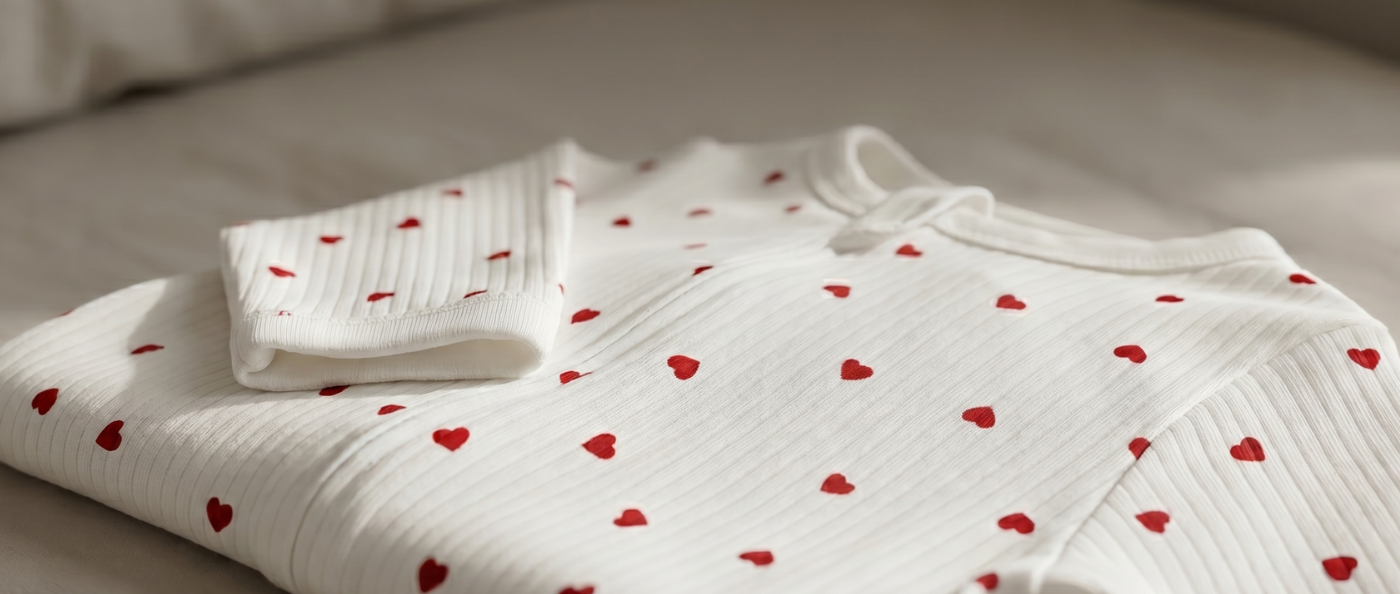
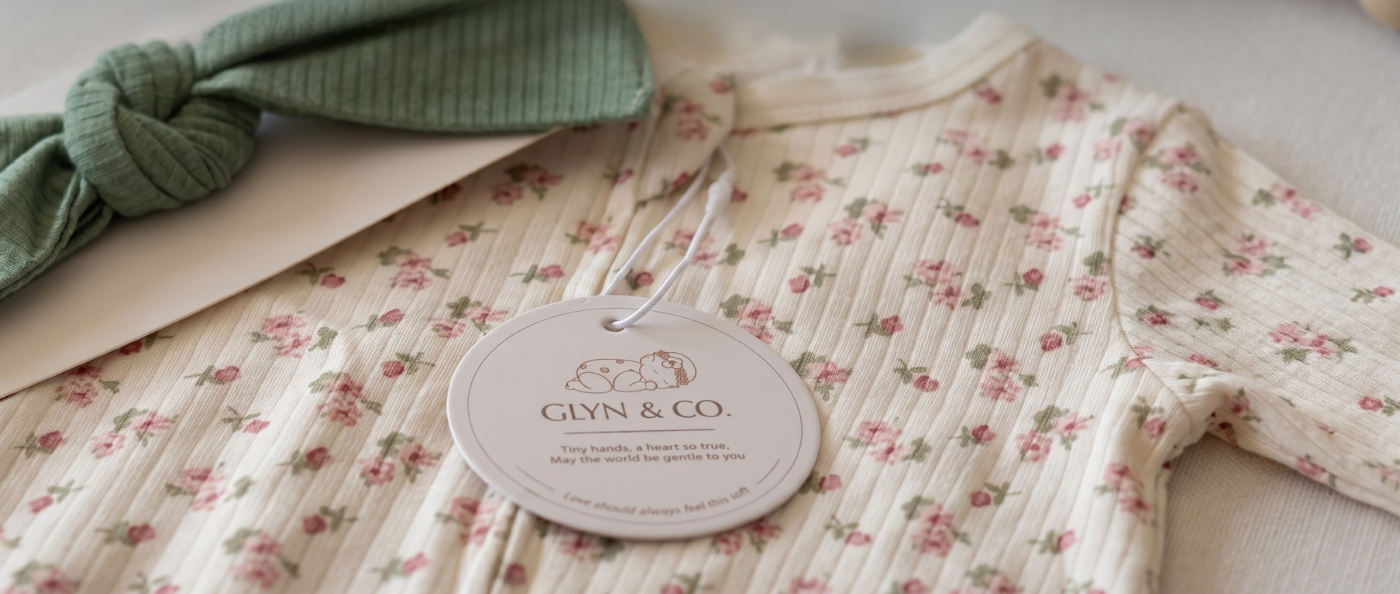
The pristine Velvet Heart Romper shows this thinking in a single piece: a soft 180 GSM cotton rib, mechanically finished and certified to OEKO-TEX® Standard 100, Class I, that keeps its shape and softness through many washes. Our signature heirloom Vintage Bloom Romper carries the same gentle approach, drape and structure that come from the knit itself rather than a chemical finish, so a well-made piece can be passed softly between siblings.
The honest takeaway is this. Easy-care labels are common and often involve chemical finishes; we simply choose not to use them, finishing our fabric gently and letting a substantial, quality knit hold its own shape. We back that choice with independent certification, OEKO-TEX Standard 100, Class I, rather than asking you to take our word for it. It is a slower way to make a garment, but it is the way we believe in.
How We Finish Our Fabric
| Property | The GLYN & CO. Approach | Parent Peace of Mind Implication |
|---|---|---|
| Finishing Method | Gentle mechanical finishing with controlled steam, moisture, and pressure, rather than chemical wrinkle-resist treatments. | A simply finished fabric that holds its shape and size through washing. |
| Shape from Quality | A substantial 180 GSM long-staple cotton naturally resists creasing through material quality, not coatings. | A clean, tailored look that lasts, with no chemical finish propping it up. |
| Breathability | An uncoated knit keeps its natural structure, letting moisture vapour escape rather than trapping dampness. | A comfortable, breathable layer next to the skin. |
| Stretch & Fit | Natural mechanical stretch through alternating rib columns, rather than a high proportion of synthetic elastic. | A comfortable, self-adjusting fit with no rigid pressure points. |
| Independent Safety Testing | Certified to OEKO-TEX® Standard 100, Class I, the strictest tier, with the lowest limit values for substances of concern in textiles intended for babies. | Documented, independent reassurance rather than a marketing claim. |
Quick Answers
What do wrinkle-free and easy-care labels mean, and how does GLYN & CO. approach finishing?
Wrinkle-free and easy-care properties often come from chemical finishes applied to fabric. GLYN & CO. chooses not to use these, finishing its cotton gently and mechanically and letting a substantial, quality knit hold its own shape, with independent OEKO-TEX certification to back it.
- What the labels often mean: Easy-care properties commonly come from chemical finishes, a widespread industry practice we simply choose differently on.
- Our gentle approach: We finish our fabric mechanically with steam and pressure and rely on a substantial 180 GSM knit to resist creasing through quality, not coatings.
- Verified, not just claimed: Our fabrics are certified to OEKO-TEX® Standard 100, Class I, offering documented reassurance about the finished garment.
A Closing Note from GLYN & CO.
An easy-care label can be appealing, and we understand the wish for simpler laundry. We have just chosen a quieter route, finishing our fabric gently and trusting a well-made knit to keep its shape, then having it independently tested so you do not have to take our word for it. We believe the early months of your baby's life are a precious, fleeting window, and the layers you choose deserve that kind of care.
The philosophy of GLYN & CO. is an invitation to slow down and trust your own sense of what feels right for your family. You bring a quiet wisdom to caring for your child, one that values lasting quality and honest design over passing trends. Wrapping your baby in our certified cotton essentials offers a soft, breathable, independently tested layer in calm, neutral tones. Let us welcome the quiet luxury of intentional design, and create a peaceful space where comfort and calm come first.