La chimie des couleurs : pourquoi GLYN & CO. choisit les teintures à faible impact
La couleur d'un vêtement de bébé est plus qu'un choix esthétique ; elle raconte également une histoire sur la façon dont cette couleur est appliquée et sa capacité à durer. Lorsque les parents créent une chambre d'enfant calme et réfléchie, les pièces qu'ils choisissent font partie d'un sentiment plus large de soin, et la façon dont un tissu est coloré est une partie discrète de cette image. Dans le cadre de la personnalité de style de vie intentionnelle de GLYN & CO., nous croyons que l'apparence d'un vêtement et la qualité de sa fabrication vont de pair. Le véritable luxe ne se trouve pas dans des motifs criards ou des détails surchargés ; il réside dans la confiance tranquille d'une pièce magnifiquement fabriquée, colorée avec soin et finie simplement. En comprenant un peu la chimie derrière la couleur des textiles, les parents peuvent apprécier pourquoi certains tissus conservent leur couleur et leur douceur bien mieux que d'autres. Pour en savoir plus sur la réflexion derrière nos matériaux, l'exploration des archives de The GLYN Journal offre un aperçu plus approfondi du savoir-faire derrière tout ce que nous fabriquons.
Les vêtements qui enveloppent un bébé sont en contact étroit avec sa peau pendant une grande partie de la journée, c'est pourquoi la façon dont un tissu est coloré a une réelle importance pour son toucher et sa longévité. Certains vêtements sont colorés avec la méthode la moins chère et la plus rapide disponible, ce qui peut laisser la couleur superficiellement sur le fil. Nous adoptons une approche différente, en choisissant des systèmes de couleur qui se lient bien à la fibre et maintiennent le tissu doux et respirant. C'est un choix de qualité et de sensation, le genre de détail qui distingue un vêtement bien pensé d'un vêtement fait à la hâte.
Les teintures réactives à faible impact agissent par une élégante réaction chimique qui forme une liaison forte et permanente avec le tissu lui-même. Pendant le processus de teinture, les molécules de couleur forment une liaison covalente directe avec la cellulose naturelle de notre coton de première qualité. Une liaison covalente est le type de liaison chimique le plus fort, ce qui signifie que la couleur ne se contente pas de rester à la surface du fil ; elle devient une partie de la structure de la fibre. C'est pourquoi la couleur réactive aux fibres est si stable et pourquoi elle donne des résultats aussi bons et durables, exactement la qualité que nous recherchons dans un vêtement conçu pour être porté et lavé de nombreuses fois.
Ce lien permanent confère au tissu fini une excellente tenue des couleurs face au frottement, au lavage et à l'usure quotidienne. C'est important pour les vêtements de bébé, où la manipulation constante et le lavage fréquent font simplement partie de la vie quotidienne. Parce que la couleur est liée à la fibre, elle reste là où elle devrait être, conservant sa profondeur et sa clarté à travers d'innombrables lavages. Le tissu reste beau et la couleur reste fidèle, même en cas d'utilisation intensive et de nombreux cycles de lavage.
En revanche, certaines méthodes de coloration moins coûteuses reposent sur la pose de la couleur à la surface du fil plutôt que sur son adhérence. Un revêtement de surface comme celui-ci peut être légèrement plus rêche au toucher et peut s'estomper ou s'user moins gracieusement avec le temps. Choisir la couleur réactive à la fibre signifie plutôt un toucher plus doux et une couleur qui dure, ce qui est la qualité réfléchie et durable pour laquelle nous concevons. C'est un petit détail, mais c'est l'une des choses qui rend un vêtement bien fait différent.
La peau d'un nouveau-né est plus douce et plus délicate que celle d'un adulte, c'est pourquoi nous veillons à ce que nos tissus soient doux et que nos finitions soient simples. Comme le montrent les études histologiques cliniques sur le développement de l'épiderme infantile, la couche externe de la peau du nouveau-né est moins développée que celle d'un adulte mature, avec des cellules cutanées plus petites et moins serrées. Cette couche externe étant plus délicate, un tissu doux et délicatement fini est tout simplement plus confortable au contact de la peau. C'est l'une des raisons les plus évidentes pour lesquelles nous accordons une grande importance à la coloration et à la finition, et pourquoi nous testons nos tissus de manière indépendante.
La couche externe de la peau agit également comme une barrière naturelle pour le corps. Comme analysé dans des recherches examinées par des pairs sur la fonction barrière cutanée néonatale, la peau des nourrissons a tendance à perdre de l'eau plus facilement que les tissus adultes matures car ses couches protectrices sont encore en développement. Un tissu doux et respirant avec une finition simple est délicat contre cette barrière en développement, aidant à maintenir l'environnement immédiat de la peau confortable. C'est la pensée pratique derrière nos choix de matériaux : garder le tissu doux, respirant et testé indépendamment, et le laisser faire son travail discret.
Les tests indépendants sont la manière dont nous donnons aux familles confiance en ce qui se trouve dans le tissu. Nos collections actuelles 100 % coton sont certifiées OEKO-TEX® Standard 100, Classe I, le niveau le plus strict de la norme, qui fixe les valeurs limites les plus basses pour les substances préoccupantes dans les articles destinés aux bébés. Ce programme de test mondialement reconnu implique un criblage en laboratoire indépendant du vêtement fini, y compris le tissu de base et les fils à coudre, par rapport aux valeurs limites de la norme. Les tests selon cette norme signifient que notre douceur et notre couleur proviennent de la qualité de la fibre, du tricot et de la teinture, et non de traitements de surface lourds. Cela élimine les incertitudes liées au choix du tissu, afin que vous puissiez construire une garde-robe de chambre d'enfant avec des matériaux qui ont été testés indépendamment.
Pour l'avenir, notre nouvelle collection Canvas introduit un tissu développé sur mesure, composé de 95 % de viscose de bambou et de 5 % de spandex, tricoté en interlock de 230 g/m² à haute densité. La viscose de bambou est une fibre d'origine végétale prisée pour sa douceur et son drapé fluide, et la petite quantité de spandex confère au vêtement une bonne tenue et une bonne récupération pour une utilisation quotidienne active. Comme le reste de notre gamme, la collection Canvas est certifiée OEKO-TEX® Standard 100, Classe I. Nous décrivons nos pièces honnêtement, ce qui signifie que nous ne qualifions pas notre stock de coton d'organique et que nous ne prétendons pas que nos vêtements contiennent des matériaux qu'ils ne contiennent pas.
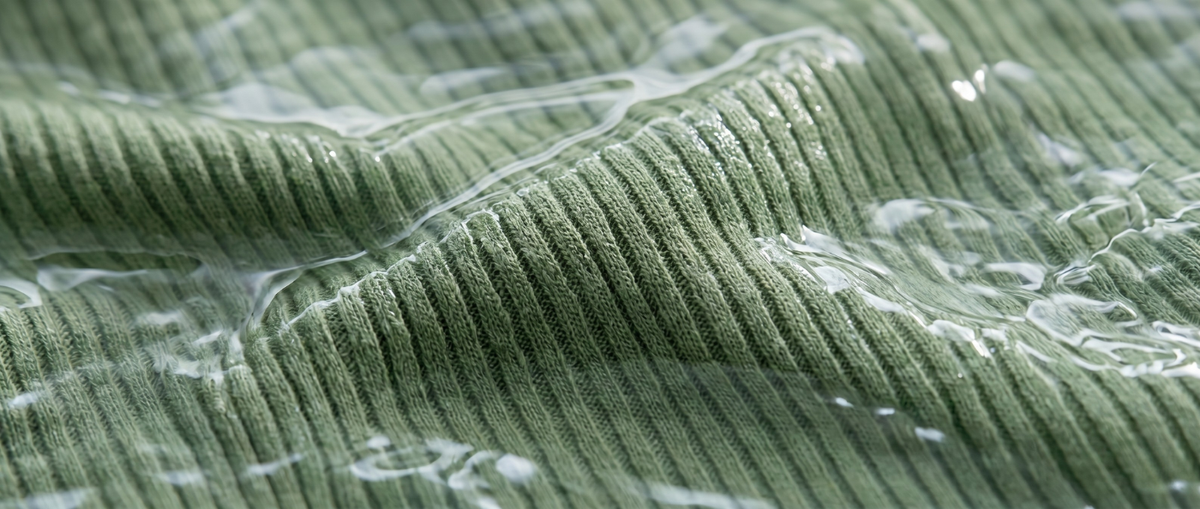
La géométrie de tricot de nos pièces est conçue pour offrir de l'élasticité par la structure plutôt que de dépendre d'une forte proportion d'élastique synthétique. Nos essentiels en coton utilisent une construction en tricot côtelé qui alterne les mailles endroit et envers en colonnes verticales, permettant au tissu de s'étirer et de se rétracter comme un accordéon doux. Cela confère une flexibilité confortable en largeur par le tricot lui-même. Lorsque votre bébé bouge, les boucles s'aplatissent et se dilatent, de sorte que nos barboteuses signature sélectionnées bougent avec lui sans tirer, et la mémoire naturelle du coton redonne au tissu sa forme, pour un ajustement ajusté et confortable qui grandit avec votre bébé.
Cette même approche s'étend à la barboteuse immaculée Velvet Heart et à notre barboteuse héritage signature Vintage Bloom, toutes deux fabriquées dans notre doux jersey de coton côtelé de 180 GSM. Elles s'adaptent en douceur aux mouvements de votre bébé et reprennent leur forme, offrant un ajustement confortable et auto-ajustable pendant de nombreux mois. La couleur reste fidèle, le tissu reste doux, et le vêtement entier est conçu pour être agréable sur la peau de votre bébé lavage après lavage.
Les vêtements de bébé jouent également un rôle essentiel pour maintenir le bébé confortablement au chaud. Comme le confirment les données cliniques concernant la physiologie cutanée et la dynamique thermique néonatales, les nouveau-nés ont une capacité limitée à réguler leur propre température corporelle et peuvent perdre de la chaleur plus rapidement qu'un adulte lorsque l'environnement change. Comme discuté dans les directives cliniques sur les mécanismes physiologiques de la thermorégulation du nouveau-né, une couche confortable et respirante est une aide précieuse. Les douces poches d'air dans les colonnes côtelées de notre coton agissent comme un isolant naturel et respirant, aidant un bébé à rester confortablement au chaud pendant les moments plus frais tout en permettant à la chaleur et à l'humidité de s'échapper lorsque la pièce se réchauffe.
Les couleurs que nous choisissons font également partie d'une esthétique plus sereine. Nos pièces se déclinent dans une palette discrète et neutre, des tons doux choisis pour s'adapter à une chambre d'enfant pensée plutôt que pour attirer l'attention. Une palette de couleurs douces et neutres a tendance à procurer un sentiment de repos à tous les habitants de la maison, et elle vieillit gracieusement plutôt que de se démoder rapidement. Les premiers mois sont une période précieuse et éphémère, et un environnement visuel calme, des couleurs douces, des surfaces épurées, des pièces bien faites, est une petite façon de faire en sorte que la chambre d'enfant ressemble à l'abri paisible que vous souhaitez qu'elle soit.
Notre approche de la couleur et du tissu
Cette matrice décrit les choix de couleurs et de matériaux derrière les pièces GLYN & CO.
| Propriété | Matériau et détails d'ingénierie | Implication pour la tranquillité d'esprit des parents |
|---|---|---|
| Méthode de coloration | Teintures réactives à faible impact qui forment une liaison covalente avec la cellulose du coton, de sorte que la couleur est intégrée à la fibre plutôt que de rester en surface. | La couleur reste fidèle et le tissu reste doux, conservant sa profondeur même après de nombreux lavages. |
| Approche de finition | Finition simple qui privilégie le toucher naturel de la fibre plutôt que les traitements de surface lourds. | Un toucher doux et respirant qui convient aux peaux délicates et à une chambre d'enfant apaisante. |
| Respirabilité | Fibres de coton naturellement structurées avec un tricot ouvert et respirant et sans revêtements lourds. | Aide à maintenir la couche près du corps confortable et sèche tout au long de la journée et de la nuit. |
| Tests de sécurité indépendants | Certifié OEKO-TEX® Standard 100, Classe I, le niveau le plus strict, avec les valeurs limites les plus basses fixées pour les substances préoccupantes dans les textiles destinés aux bébés. | Offre une assurance documentée et indépendante quant à la sécurité chimique du tissu le plus proche de votre bébé. |
| Palette | Une gamme discrète et neutre de tons doux choisis pour s'adapter à une chambre d'enfant calme et réfléchie. | Un environnement visuel reposant qui vieillit gracieusement plutôt que de se démoder rapidement. |
En bref
Pourquoi GLYN & CO. utilise-t-il des teintures réactives à faible impact sur la fibre ?
GLYN & CO. utilise des teintures réactives à faible impact sur la fibre car elles forment une liaison covalente forte avec la fibre de coton, de sorte que la couleur est intégrée au tissu plutôt que de rester en surface, gardant les vêtements doux et leur couleur fidèle à travers de nombreux lavages.
- Couleur durable : Les teintures réactives à la fibre se lient au coton lui-même, de sorte que la couleur conserve sa profondeur et sa clarté après des lavages répétés et une usure quotidienne.
- Toucher doux : Parce que la couleur est liée à la fibre plutôt que d'être recouverte, le tissu conserve son toucher naturellement doux et respirant.
- Testé indépendamment : La certification OEKO-TEX® Standard 100, Classe I, offre une assurance documentée quant à la sécurité chimique du tissu le plus proche de votre bébé.
Un dernier mot de GLYN & CO.
Une chambre d'enfant peut être un havre de paix au milieu du rythme effréné du monde moderne. Nous croyons que les premiers mois de la vie de votre bébé sont une période précieuse et fugace, et que les couches que vous placez contre sa peau, ainsi que les couleurs qui l'entourent, méritent d'être choisies avec soin. Notre engagement envers une couleur réfléchie et une finition simple est une façon d'essayer de fabriquer un vêtement aussi agréable à regarder qu'à toucher, doux, respirant et fait pour durer.
La philosophie de GLYN & CO. est une invitation à ralentir et à faire confiance à votre propre intuition pour ce qui convient le mieux à votre famille. Vous apportez une sagesse tranquille aux soins de votre enfant, une sagesse qui valorise la qualité durable et le design honnête plutôt que les tendances passagères. Enveloppez votre bébé dans nos essentiels en coton certifié offre une couche douce et respirante dans des tons calmes et neutres, le genre de détail discret qui aide une chambre d'enfant à se sentir apaisée. Accueillons le luxe discret du design intentionnel et créons un espace paisible où le confort et le calme sont prioritaires.