Pourquoi les vêtements de bébé en fibres naturelles ont leur place dans une chambre d'enfant apaisante
La création d'une chambre de bébé calme et bien pensée est l'une des premières joies discrètes de la préparation à l'arrivée d'un nouveau-né, une occasion de façonner l'espace où votre enfant passera tant de ses premières heures à se reposer et à grandir. Dans la vision de GLYN & CO. sur un mode de vie intentionnel, nous considérons la chambre de bébé non seulement comme une pièce stylée, mais comme un environnement doux et réfléchi, où la lumière, l'air, la texture et les tissus que votre bébé porte contribuent tous à un sentiment de bien-être. En agençant les meubles et en choisissant des couches de vêtements douces, il est naturel de penser aux matériaux que vous introduisez dans la pièce, et aux raisons pour lesquelles les fibres naturelles occupent une place si durable dans la garde-robe d'un bébé. Ce guide explore le simple attrait des vêtements pour bébé en fibres naturelles et comment ils s'intègrent à un foyer calme et réfléchi. Si ce genre de réflexion vous plaît, explorer les archives du GLYN Journal vous en apprendra davantage sur les matériaux, l'artisanat et la philosophie du slow living qui sous-tend tout ce que nous fabriquons.
Les fibres naturelles sont choisies pour les vêtements de bébé depuis des générations, et pour de bonnes raisons. Le coton et d'autres fibres végétales sont naturellement respirants et absorbants, des qualités qui les rendent confortables contre la peau délicate de jour comme de nuit. Ils absorbent et libèrent facilement l'humidité, aidant le tissu à rester doux et confortable plutôt que humide. Ils sont doux au toucher, se lavent bien et possèdent une qualité discrète et intemporelle qui convient à une chambre de bébé bien pensée. Lorsque vous choisissez des vêtements en fibres naturelles, vous choisissez des matériaux dont le confort et la sensation ont résisté à l'épreuve du temps, c'est précisément pourquoi ils sont au cœur de nos collections.
Les fibres synthétiques telles que le polyester et le nylon sont conçues pour la durabilité et le faible coût, et elles ont leur place dans de nombreux vêtements. Pour la garde-robe quotidienne d'un bébé, cependant, nous préférons simplement la sensation et la respirabilité des fibres naturelles. Les tissus d'origine végétale ont tendance à gérer l'humidité et la chaleur d'une manière qui procure une sensation douce et confortable contre la peau jeune, et ils ont la texture douce et naturelle que nous souhaitons pour nos pièces. C'est un choix de conception ancré dans le confort et la sensation, et non un jugement sur tout autre produit. Nous nous concentrons sur une seule chose : fabriquer des vêtements de bébé doux, respirants et magnifiquement finis à partir de matériaux auxquels nous croyons.
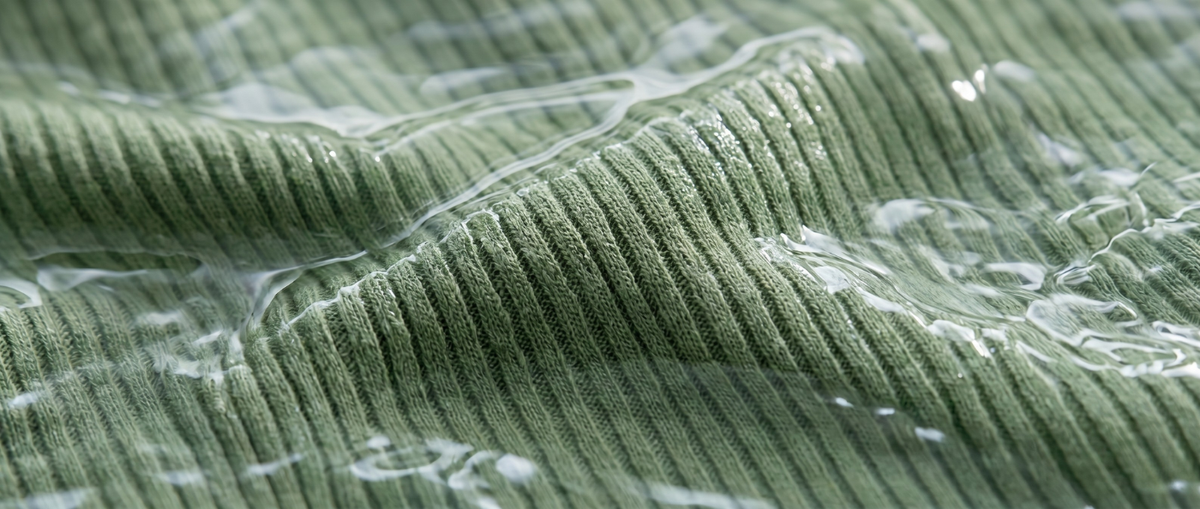
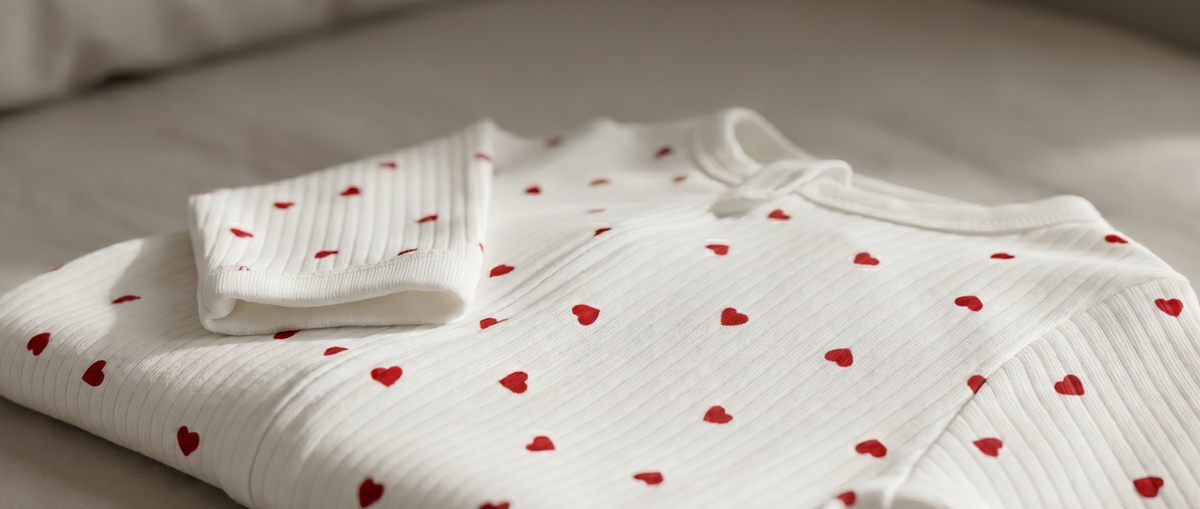
Nos essentiels fondamentaux sont fabriqués à partir d'un coton 100 % de première qualité, tricoté en une côte 6x2 de haute densité (180 g/m²) qui confère au tissu un beau corps et une grande douceur. Chaque pièce de cette collection signature, y compris la barboteuse Moon Bear, la barboteuse immaculée Velvet Heart, et notre barboteuse héritage signature Vintage Bloom, est dotée de pieds intégrés pour garder les petits membres confortablement couverts. Pour compléter ces tenues en parfaite harmonie, deux accessoires coordonnés les accompagnent : le nœud en côte sauge conçu pour accompagner la barboteuse Vintage Bloom, et le nœud en côte rubis créé pour assortir la barboteuse Velvet Heart. Chaque pièce est certifiée OEKO-TEX® Standard 100, Classe I, le niveau le plus strict de la norme, qui fixe les valeurs limites les plus basses pour les substances préoccupantes dans les articles destinés aux bébés. Nous décrivons nos pièces honnêtement, ce qui signifie que nous n'appelons pas ce stock de coton actuel biologique, et nous ne prétendons pas qu'il contient des matériaux qu'il ne contient pas, tels que des boutons-pression en cuivre.
La peau d'un nouveau-né se développe encore pendant la première phase de sa vie, ce qui explique en partie pourquoi le tissu qui repose sur elle mérite d'être choisi avec soin. Selon des études histologiques cliniques publiées sur le développement de l'épiderme infantile, la couche la plus externe de la peau d'un nouveau-né est moins développée que le tissu adulte mature, avec des cellules cutanées plus petites et moins étroitement liées. Parce que cette couche externe est moins dense, elle est plus délicate que celle d'un adulte. C'est l'une des raisons les plus claires pour lesquelles nous testons nos tissus selon les limites de la norme OEKO-TEX® Standard 100, Classe I, afin que la couche la plus proche de votre bébé soit une couche dont vous pouvez vous sentir en confiance.
La barrière naturelle d'hydratation d'un nouveau-né fonctionne également dans des limites biologiques réelles au cours de la première année. Cette barrière agit un peu comme une colle protectrice douce, utilisant une matrice délicate d'huiles et de graisses naturelles pour maintenir les jeunes cellules de la peau ensemble comme du mortier entre des briques. Comme démontré dans des recherches examinées par des pairs sur la fonction de la barrière cutanée néonatale, la peau infantile a tendance à perdre de l'eau plus facilement car cette couche huileuse naturelle est encore en train de s'organiser. Un tissu doux, respirant et absorbant aide à maintenir l'environnement immédiat de la peau confortable, ce qui est l'une des choses simples et pratiques qu'un bon vêtement pour bébé peut faire. Choisir une couche douce et bien faite est un moyen bienveillant et facile de soutenir le confort de votre bébé pendant de longues périodes de sommeil ou de jeu.
La peau de bébé retrouve progressivement son équilibre naturel au cours des premières semaines de vie, un processus parfois décrit comme le développement du manteau acide, qui soutient à son tour le développement sain du microbiome cutané. À la naissance, la surface est plus proche de la neutralité, évoluant progressivement vers une plage légèrement acide au cours des premières semaines. Une couche sèche, respirante et confortable soutient simplement l'environnement calme dans lequel un bébé se sent le plus à l'aise. C'est en partie pourquoi nous concevons nos tissus pour qu'ils soient doux et respirants, et pourquoi nous maintenons une finition simple plutôt que de recourir à des traitements lourds.
La thermorégulation du nouveau-né signifie que les vêtements de bébé sont, en un sens réel, un partenaire quotidien pour le maintenir confortable. Selon les directives cliniques sur les mécanismes physiologiques de la thermorégulation du nouveau-né, le contrôle de la température infantile est moins développé que celui d'un adulte, en partie parce que les bébés ne peuvent pas encore frissonner pour générer de la chaleur et ont une surface corporelle plus grande par rapport à leur masse corporelle. Cela signifie qu'un bébé peut perdre de la chaleur plus rapidement qu'un adulte lorsque l'environnement change. Une couche confortable et respirante qui maintient une chaleur douce sans retenir l'humidité aide le bébé à rester stable, ce qu'un vêtement en fibres naturelles bien fait est précisément conçu pour faire.
Un tissu respirant favorise un microclimat confortable à côté de la peau, aidant un bébé à rester confortablement au chaud pendant les moments plus frais tout en permettant à l'humidité de s'échapper à mesure que l'environnement se réchauffe. Comme discuté dans les données cliniques concernant la physiologie cutanée néonatale et la dynamique thermique, une couche confortable et bien isolée aide un bébé à rester stable, de sorte qu'une plus grande partie de son énergie reste disponible pour la croissance et le repos. Nos cotons substantiels de 180 g/m² et nos tricots interlock de 230 g/m² sont conçus pour offrir cette chaleur douce et respirante, le genre de couche confortable qui convient à une chambre de bébé calme.
Nos essentiels fondamentaux utilisent 100 % de coton, certifié OEKO-TEX® Standard 100, Classe I, tricoté dans notre côte signature 6x2 pour un toucher doux et respirant. Pour les familles attirées par une couche encore plus douce et plus raffinée, notre nouvelle collection Canvas, que nous appelons "The Silk Edit", apporte un drapé fluide et doux à la même esthétique calme. Les pièces Canvas sont fabriquées à partir de 95 % de viscose de bambou et de 5 % d'élasthanne, tricotées en un interlock de haute densité (230 g/m²) pour la douceur et une structure délicate.
La viscose de bambou est une fibre d'origine végétale prisée pour sa douceur et son drapé fluide ; vous pouvez en apprendre davantage sur la façon dont la fibre de bambou est étudiée et caractérisée dans la littérature sur les matériaux. Pour que le vêtement conserve sa forme et retrouve sa forme après le port quotidien, nous incluons un minimum de 5 % d'élasthanne dans le fil. Cette petite quantité d'élasthanne aide les pièces à conserver leur forme au lieu de s'affaisser et d'être jetées prématurément, favorisant ainsi une garde-robe durable. Comme le reste de notre gamme, la collection Canvas est certifiée OEKO-TEX® Standard 100, Classe I.
La collection Canvas comprend des détails fonctionnels haut de gamme conçus pour faciliter le quotidien des parents. Chaque barboteuse est dotée de fermetures éclair assorties qui se fondent discrètement dans la silhouette, de mains et de moufles repliables intégrées pour aider à couvrir les petits doigts, et de poignées antidérapantes sur les pieds pour les tailles de 12 à 18 mois et de 18 à 24 mois afin de soutenir les premiers pas stables. Elle est disponible en deux couleurs unies et sophistiquées : Canvas Mint, un vert doux disponible en barboteuse, bonnet et sac de couchage, et Canvas Mauve, un violet discret et poudré disponible en barboteuse, bandeau et sac de couchage. Nous avons également informé notre communauté qu'un chapitre imprimé sur mesure de cette collection, la phase 2, est à l'horizon, invitant les familles à un parcours partagé d'affinage continu des matériaux.
Lorsque vous habillez votre bébé avec la barboteuse Velvet Heart ou notre barboteuse héritage signature Vintage Bloom, vous choisissez une couche de coton de 180 g/m² tricotée pour rester douce et résister au boulochage. Nous maintenons une finition simple, privilégiant le toucher naturel de la fibre plutôt que des traitements lourds, afin que le tissu conserve son caractère doux et respirant lavage après lavage. C'est le genre de qualité réfléchie et durable auquel nous croyons, des pièces faites pour durer et pour être agréables sur la peau de votre bébé au fil des saisons. Vous pouvez parcourir la gamme complète de nos barboteuses sélectionnées signature pour trouver les tons qui conviennent à votre chambre de bébé.
Vêtements de bébé en fibres naturelles, en un coup d'œil
| Propriété | Détail matériel et d'ingénierie | Implication pour la tranquillité d'esprit des parents |
|---|---|---|
| Teneur en fibres naturelles | Essentiels fondamentaux en 100 % coton; Collection Canvas en 95 % viscose de bambou avec 5 % d'élasthanne pour le maintien de la forme. | Une couche douce, respirante et naturellement absorbante choisie pour le confort contre la peau délicate. |
| Respirabilité et confort | Structures en fibres naturelles qui absorbent et libèrent la vapeur d'eau, soutenues par les canaux ouverts de la côte 6x2. | Aide à maintenir la surface de la peau confortable et sèche de jour comme de nuit. |
| Élasticité et maintien de la forme | Les essentiels fondamentaux utilisent l'étirement mécanique naturel des boucles; les articles Canvas utilisent un minimum de 5 % d'élasthanne pour le maintien de la forme. | Permet un mouvement confortable et aide les vêtements à conserver leur forme lors de l'utilisation quotidienne. |
| Longévité des matériaux | Poids de tissu substantiels (180 g/m² et 230 g/m²) qui résistent à l'amincissement et au boulochage au fil des cycles de lavage continus. | Aide les pièces à conserver un aspect net et ajusté et soutient une garde-robe capsule durable. |
| Tests de sécurité indépendants | Certifié OEKO-TEX® Standard 100, Classe I, le niveau le plus strict, avec les valeurs limites les plus basses fixées pour les substances préoccupantes dans les textiles destinés aux bébés. | Offre une assurance documentée et indépendante quant à la sécurité chimique du tissu le plus proche de votre bébé. |
La réponse rapide
Pourquoi de nombreux parents choisissent-ils des vêtements en fibres naturelles pour la garde-robe quotidienne de leur bébé ?
De nombreux parents choisissent les vêtements pour bébé en fibres naturelles car des fibres telles que le coton sont respirantes, naturellement absorbantes et douces pour la peau délicate, des qualités qui les rendent confortables pour un usage quotidien et bien adaptées à une chambre de bébé calme et réfléchie.
- Respirant et absorbant : Les fibres naturelles absorbent et libèrent facilement l'humidité, aidant le tissu à rester doux et la surface de la peau confortable de jour comme de nuit.
- Toucher doux et durable : Le coton et la viscose de bambou offrent un toucher doux et naturel qui se lave bien et conserve son caractère au fil du temps.
- Testé indépendamment : Le choix de tissus certifiés OEKO-TEX® Standard 100, Classe I offre une garantie documentée quant à la sécurité chimique de la couche la plus proche de votre bébé.
Un mot de la fin de GLYN & CO.
L'environnement que nous créons dans une chambre de bébé est une partie calme et continue de la petite enfance d'un enfant, façonnant les rythmes doux de ces premiers mois. Chez GLYN & CO., nous pensons que ces premiers chapitres méritent des matériaux choisis avec soin, des fibres naturelles douces, une finition simple et une approche calme et réfléchie de tout ce que nous fabriquons. Les lignes verticales de notre côte signature sont plus qu'un langage de conception ; elles font partie d'une promesse de douceur et de qualité discrète, conçues pour être agréables sur la peau de votre bébé.
La philosophie de GLYN & CO. est une invitation à ralentir et à faire confiance à votre propre intuition de ce qui convient à votre famille. Vous apportez une sagesse tranquille à la prise en charge de votre enfant, une sagesse qui valorise la vie lente, l'artisanat honnête et la qualité réfléchie. Que vous enveloppiez votre bébé dans nos essentiels en coton certifié ou dans notre nouvelle collection Canvas, notre objectif est le même : un tissu doux, respirant et testé indépendamment qui aide votre tout-petit à se reposer et à grandir confortablement. Accueillons le luxe discret d'un design intentionnel et créons un espace où le confort et le calme sont prioritaires.