Le luxe fonctionnel de la texture : le coton côtelé versus le jersey standard pour la peau de bébé
Une chambre d'enfant est souvent pensée d'abord par l'œil : les couleurs douces des murs, les courbes délicates des meubles, les imprimés subtils sur les vêtements pliés. Mais une fois que le bébé arrive et que le rythme quotidien de l'habillage et du déshabillage commence, les familles découvrent rapidement que les premiers temps de la parentalité sont autant une question de toucher que d'apparence. La couche de tissu qui touche la peau de votre bébé détermine son confort et son bien-être tout au long de la journée. Chez GLYN & CO., dont le style de vie est intentionnel, notre studio choisit les tissus en tenant compte de cela, convaincus que chaque décision concernant la couche de base mérite une réflexion et un soin particuliers.
Le choix entre le coton jersey standard et le coton côtelé tridimensionnel est un carrefour significatif dans la conception de la garde-robe d'un bébé. La plupart des parents connaissent le jersey, ce tissu plat et uniforme utilisé pour les t-shirts basiques et les grenouillères de tous les jours. C'est un excellent tissu et il est très souvent utilisé pour les vêtements d'enfants. GLYN & CO. a délibérément choisi de construire ses collections fondamentales sur une structure côtelée, non pas pour suivre une tendance, mais parce que la géométrie d'un tricot côtelé apporte de réels avantages tangibles en termes de confort qu'un tissu plat gère simplement différemment.
Comprendre un peu le fonctionnement de la peau de bébé permet d'expliquer pourquoi la texture est importante. La peau d'un nouveau-né semble parfaite, mais elle est encore en développement, et tout tissu porté de nombreuses heures par jour est en contact étroit et continu avec elle. En explorant les archives du GLYN Journal, les familles peuvent en apprendre davantage sur l'interaction entre les textiles et la peau, en termes simples et honnêtes. Savoir pourquoi un tissu doux, respirant et bien fait est agréable sur la peau d'un nouveau-né permet de choisir en toute confiance plutôt que sous la pression du marketing.
La peau d'un nouveau-né est plus douce et plus délicate que celle d'un adulte. Comme confirmé dans les études histologiques cliniques sur le développement de l'épiderme infantile, la couche externe de la peau d'un nouveau-né est moins développée que celle d'un adulte mature, avec des cellules cutanées plus petites et moins serrées. Étant donné que cette couche externe est plus délicate au début de la petite enfance, un tissu doux qui ne presse pas de manière plate et lourde contre le corps est tout simplement plus confortable, ce qui est l'une des raisons pour lesquelles une côte texturée peut être un choix si agréable.
La couche externe de la peau agit également comme sa barrière de surface naturelle. Comme évalué dans une recherche évaluée par des pairs sur la fonction de barrière cutanée néonatale, la peau du nourrisson a tendance à perdre de l'eau plus facilement que les tissus d'un adulte mature, car ses couches protectrices sont encore en développement. Un tissu doux et respirant est délicat pour cette barrière en développement et aide à maintenir un environnement confortable pour la peau. Nos choix de matériaux visent précisément cela : rester doux, respirant et délicat pour la peau.
La peau de bébé trouve aussi progressivement son équilibre naturel au cours des premières semaines de vie, parfois décrit comme le développement du manteau acide, passant d'une surface quasi neutre à une surface légèrement acide, ce qui favorise le développement sain du microbiome cutané. Un tissu doux, respirant et confortable favorise simplement l'environnement calme dans lequel un bébé se sent le plus à l'aise. C'est en partie la raison pour laquelle nous simplifions nos finitions et privilégions la sensation naturelle de la fibre.
Passons maintenant au tissu lui-même. Le jersey standard est un tricot plat, bidimensionnel, avec relativement peu d'élasticité naturelle. Sous grossissement, c'est une série uniforme de boucles à surface unique qui restent assez compactes lorsque le tissu bouge. Parce que le jersey plat a une élasticité naturelle limitée, les marques ajoutent souvent de l'élasticité en modifiant la composition des fibres, en mélangeant de l'élasthanne synthétique pour que le vêtement s'adapte à un bébé actif et à une couche qui bouge. Cela fonctionne, mais cela modifie la composition du tissu.
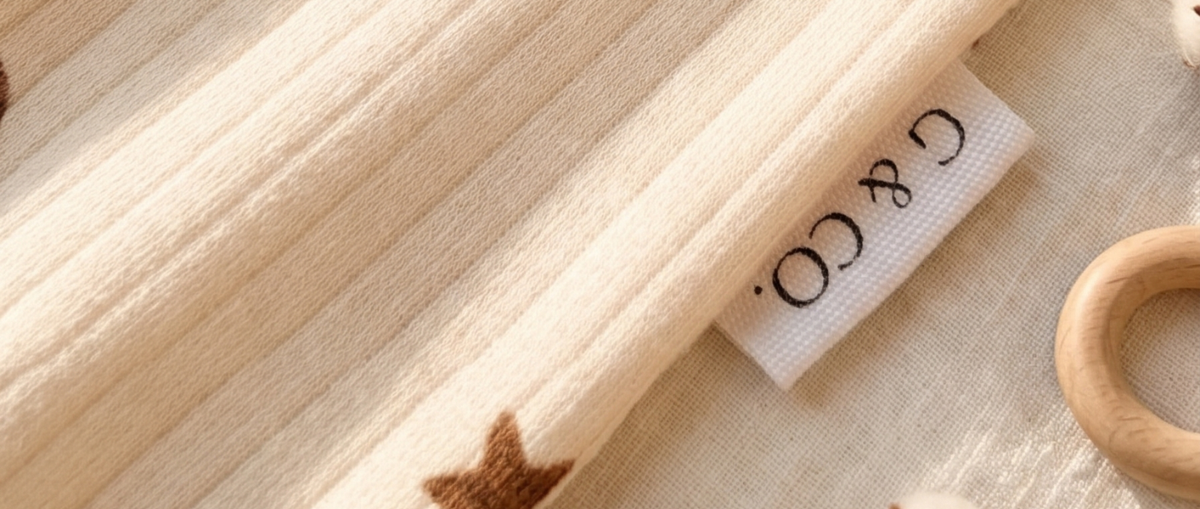
Un tricot côtelé adopte une approche différente, obtenant un étirement confortable grâce à sa structure plutôt que de dépendre d'une forte proportion d'élastique synthétique. Notre tricot alterne des boucles à l'endroit et des boucles à l'envers en colonnes verticales, créant une surface tridimensionnelle qui se plie comme un accordéon doux. Lorsque votre bébé s'étire, se tourne ou donne des coups de pied, les colonnes côtelées s'ouvrent et s'allongent dans le sens de la largeur pour accompagner ses mouvements, sans points de pression rigides. Cela offre une liberté de mouvement confortable tout en conservant à nos barboteuses sélectionnées signature, fabriquées à partir de fibres d'origine naturelle, une élasticité intégrée au tricot.
Cette structure côtelée possède également une belle mémoire naturelle : les boucles reprennent leur forme d'origine une fois la tension relâchée. Cela aide le vêtement à conserver sa coupe ajustée pendant des mois de croissance, sans se déformer ou se détendre comme le peut un jersey fin. Parce que le tissu est souple et retrouve sa forme en douceur, il accompagne les mouvements de votre bébé avec fluidité et confort, reprenant sa forme après chaque étirement.
Les vêtements d'un bébé jouent également un rôle essentiel pour le maintenir confortablement au chaud. Comme le confirment les données cliniques concernant la physiologie cutanée néonatale et la dynamique thermique, les nouveau-nés ont une capacité limitée à réguler leur propre température corporelle et peuvent perdre de la chaleur plus rapidement qu'un adulte lorsque l'environnement change. Une couche confortable et respirante est une aide précieuse, et c'est précisément là qu'une côte texturée excelle.
Les petites vallées d'un tricot côtelé créent un microclimat confortable près de la peau. Ces canaux verticaux se situent entre le tissu et le corps, aidant à équilibrer l'échange de chaleur avec la pièce. Dans les moments plus frais, ils retiennent une fine couche de chaleur douce, agissant comme un isolant naturel et respirant; à mesure que la pièce se réchauffe, la structure ouverte et respirante permet à l'air de circuler, de sorte que la chaleur et l'humidité peuvent s'échapper avant que l'humidité ne s'accumule contre la peau.
Cette chaleur respirante est importante car les nouveau-nés ne peuvent pas encore frissonner pour générer de la chaleur. Comme cela est abordé dans les directives cliniques sur la mécanique physiologique de la thermorégulation néonatale, une couche de vêtements confortable et respirante aide le bébé à rester serein, lui permettant de conserver davantage d'énergie pour le repos et la croissance. Une côte bien faite et respirante est conçue pour offrir précisément ce type de chaleur douce et confortable.
Le poids du tissu, mesuré en grammes par mètre carré (GSM), est l'un des indicateurs les plus clairs de la substance et de la durabilité d'un tissu. Nos essentiels de base utilisent un coton substantiel de 180 GSM, qui contient plus de fibres de coton dans le tissu qu'un tricot fin et léger. Cela confère au vêtement un poids confortable et réfléchi qui résiste naturellement au froissement et au boulochage grâce à la qualité du matériau plutôt qu'à des amidons ou des revêtements chimiques. C'est en partie pourquoi nos pièces conservent leur toucher doux et ajusté lavage après lavage.
Les tests indépendants sont la manière dont nous offrons aux familles la confiance en ce que contiennent nos tissus. Nos collections actuelles 100 % coton sont certifiées OEKO-TEX® Standard 100, Classe I, le niveau le plus strict de la norme, qui fixe les valeurs limites les plus basses pour les substances préoccupantes dans les articles destinés aux bébés. Ce programme mondialement reconnu implique un criblage en laboratoire indépendant du vêtement fini, y compris le tissu de base et les fils de couture, par rapport aux valeurs limites de la norme. Tester selon cette norme signifie que notre douceur provient de la qualité de la fibre et du tricot, et non de traitements de surface lourds.
Pour l'avenir, notre nouvelle collection Canvas introduit un tissu développé sur mesure, composé à 95 % de viscose de bambou et à 5 % de spandex, tricoté en un interlock de haute densité de 230 GSM. La viscose de bambou est une fibre d'origine végétale appréciée pour sa douceur et son drapé fluide, et la petite quantité de spandex confère au vêtement une bonne tenue et une bonne récupération pour une utilisation quotidienne active. Comme le reste de notre gamme, la collection Canvas est certifiée OEKO-TEX® Standard 100, Classe I. Nous décrivons nos pièces honnêtement, ce qui signifie que nous ne qualifions pas nos stocks de coton de biologiques, et nous décrivons toujours le tissu Canvas comme de la viscose de bambou.
La barboteuse Velvet Heart immaculée montre comment cette géométrie côtelée transforme un essentiel simple en une pièce merveilleusement portable. Parce qu'elle repose sur l'étirement mécanique naturel de ses colonnes verticales, elle drape délicatement votre bébé sans lourds stabilisateurs synthétiques. Comme le reste de notre gamme en coton, elle est certifiée OEKO-TEX® Standard 100, Classe I, de sorte que la couche la plus proche de votre bébé est testée de manière indépendante. C'est le genre de pièce douce, réfléchie et quotidienne qui est aussi ravissante lorsque vous sortez.
Notre barboteuse signature Vintage Bloom, héritage précieux, illustre la même philosophie. Les lignes verticales des côtes confèrent une silhouette nette et ajustée qui se photographie à merveille et conserve sa forme au fil des longues journées. Un doux processus de pré-finition utilisant de la vapeur et de la pression aide le coton à conserver sa forme, son épaisseur et sa douceur après de nombreux lavages, permettant ainsi à la pièce d'être transmise en douceur entre frères et sœurs. Choisir ce type de qualité durable est aussi une manière plus discrète et réfléchie de construire une garde-robe.
Coton côtelé vs Jersey standard
Ce tableau présente les différences structurelles et de confort entre une côte texturée et un jersey plat standard.
| Propriété | Détail Matériel & Ingénierie | Implication pour la tranquillité d'esprit des parents |
|---|---|---|
| Structure du tricot |
Coton côtelé GLYN & CO. 180 GSM : Des colonnes verticales alternées maintiennent le tissu délicatement contre le corps avec une surface douce et texturée. Jersey plat standard : Une disposition de boucles plate et bidimensionnelle qui repose uniformément contre la peau. | Une couche douce et texturée qui repose confortablement sur la peau délicate. |
| Extensibilité et ajustement | Extensibilité mécanique naturelle grâce à des colonnes côtelées alternées, plutôt qu'une forte proportion d'élastique synthétique. | Mouvement confortable qui épouse le corps et ajustement qui retrouve sa forme. |
| Respirabilité et chaleur | Les canaux verticaux créent de douces poches d'air qui aident à retenir la chaleur dans les moments plus frais et laissent l'humidité s'échapper lorsque la pièce se réchauffe. | Aide à maintenir la peau confortable et sèche, et le bébé agréablement au chaud. |
| Poids et mémoire du tissu | Coton à fibres longues de 180 GSM substantiel qui conserve sa forme et résiste au froissement ou au boulochage. | Un look net et ajusté qui reste impeccable même après une longue journée de port. |
| Tests de sécurité indépendants | Certifié OEKO-TEX® Standard 100, Classe I, le niveau le plus strict, avec les valeurs limites les plus basses pour les substances préoccupantes dans les textiles destinés aux bébés. | Offre une assurance documentée et indépendante quant à la sécurité chimique du tissu le plus proche de votre bébé. |
En bref
Pourquoi le coton côtelé convient-il mieux à la peau de bébé que le jersey plat standard ?
Le coton côtelé convient bien à la peau de bébé car ses colonnes verticales tridimensionnelles maintiennent délicatement le tissu contre le corps et créent des canaux d'air, offrant une extensibilité naturelle et un confort respirant sans dépendre d'une forte proportion d'élasthanne synthétique.
- Surface douce et texturée : Les colonnes en relief des côtes reposent délicatement sur la peau au lieu d'être plates et lourdes, pour une sensation agréable.
- Extensibilité structurelle : Les boucles alternées à l'endroit et à l'envers confèrent une extensibilité qui épouse le corps grâce au tricot lui-même, de sorte que les pièces fondamentales accompagnent les mouvements de bébé sans élastique synthétique lourd.
- Respirant et testé indépendamment : Les canaux d'air des côtes favorisent un microclimat confortable, et la certification OEKO-TEX® Standard 100, Classe I, offre une garantie documentée de la sécurité chimique du tissu.
Un mot de la fin de GLYN & CO.
Une chambre de bébé peut être un havre de paix au milieu du rythme effréné du monde moderne. Nous pensons que les premiers mois de la vie de votre bébé sont une fenêtre précieuse et éphémère, et les couches que vous placez contre sa peau méritent d'être choisies avec soin. Notre engagement envers une confection réfléchie, une côte substantielle et respirante et des tests indépendants, est une façon d'essayer de créer un vêtement aussi agréable à porter qu'à regarder, doux, confortable et fait pour durer.
La philosophie de GLYN & CO. est une invitation à ralentir et à faire confiance à votre propre ressenti pour ce qui est bon pour votre famille. Vous apportez une sagesse sereine à la prise en charge de votre enfant, une sagesse qui valorise la qualité durable et le design honnête plutôt que les tendances passagères. Enveloppez votre bébé dans nos essentiels en coton certifié pour une couche douce, respirante et testée indépendamment, aux tons calmes et neutres. Accueillons le luxe discret d'un design intentionnel et créons un espace paisible où le confort et le calme priment.