Au-delà du 100 % Coton : Pourquoi la certification est primordiale
Pendant des générations, les mots 100 % coton sur une étiquette ont été un raccourci réconfortant pour les parents : un signe de respirabilité, d'origines naturelles et d'une sensation de douceur sur la peau de bébé. C'est une chose bonne et digne de confiance à rechercher. Mais une étiquette de composition ne répond qu'à une seule question, celle de la matière du tissu, et il y a une deuxième question qui mérite également d'être posée : ce qui est arrivé à ce tissu entre le champ et le vêtement fini. Dans la vision d'un mode de vie intentionnel de GLYN & CO., nous considérons le vrai luxe comme quelque chose de plus discret qu'une étiquette ou une esthétique ; c'est la confiance qui vient de savoir que le tissu le plus proche de votre bébé a été testé de manière indépendante. Cet article explique pourquoi une étiquette de composition est un point de départ plutôt que l'histoire complète, et ce qu'ajoute la certification du vêtement fini.
Il est utile de commencer par expliquer pourquoi le tissu que porte un bébé doit être choisi avec soin. La peau d'un nouveau-né est plus douce et plus délicate que celle d'un adulte, et les vêtements sont en contact étroit avec elle pendant une grande partie du jour et de la nuit. Comme le confirment des études histologiques cliniques sur le développement de l'épiderme infantile, la couche externe de la peau du nouveau-né est moins développée que celle d'un adulte mature, avec des cellules cutanées plus petites et moins serrées. Parce que cette couche externe est plus délicate au début de l'enfance, choisir un tissu doux, délicatement fini et testé indépendamment est une décision réfléchie et pratique pour la couche la plus proche de votre bébé.
La couche externe de la peau agit également comme une barrière naturelle. Comme l'expliquent des recherches examinées par des pairs sur la fonction de barrière cutanée néonatale, la peau du nourrisson a tendance à perdre de l'eau plus facilement que les tissus adultes matures parce que ses couches protectrices sont encore en développement. C'est en partie pourquoi les qualités du tissu fini, sa douceur, sa respirabilité et ce pour quoi il a été testé, sont réellement importantes, et pourquoi une certification qui examine le vêtement terminé est si utile.
Voici le point clé concernant une étiquette de composition de fibres. Un vêtement correctement décrit comme 100 % coton vous indique la nature de la fibre, ce qui est vraiment utile. Mais le coton, comme tout textile, passe par plusieurs étapes de fabrication entre le champ et la pièce finie : il est filé, lavé, teint, apprêté et cousu. Une étiquette de composition décrit l'origine de la fibre ; elle n'est pas conçue pour confirmer le profil chimique du vêtement fini après tout ce traitement. Ainsi, une étiquette 100 % coton est un point de départ significatif plutôt qu'une image complète de ce qui est présent dans le tissu que vous manipulez finalement.
C'est précisément cette lacune que les tests indépendants sur les produits finis sont conçus pour combler. Parce que tant de choses se produisent entre la fibre et la pièce finie, il est utile de poser une question distincte : qu'est-ce qui, le cas échéant, reste dans le vêtement qui sera en contact avec la peau ? C'est la question à laquelle la norme OEKO-TEX Standard 100 est conçue pour répondre.
OEKO-TEX Standard 100 est un système de test internationalement reconnu qui se concentre sur le vêtement fini plutôt que sur la manière dont la fibre a été cultivée. Pour obtenir la certification, le textile fini est examiné dans un laboratoire indépendant par rapport à des valeurs limites pour un large éventail de substances préoccupantes, évaluées telles qu'elles existent dans le tissu lorsque votre enfant le porte réellement. La Classe I est son niveau le plus strict, défini spécifiquement pour les textiles destinés aux bébés et aux jeunes enfants jusqu'à trois ans, avec les valeurs limites les plus basses de la norme.
Il est important de noter que les tests portent sur les composants qui constituent le vêtement fini, y compris le tissu de base et les fils à coudre, plutôt que de se contenter de faire une déclaration sur une seule partie. Cette approche holistique est en partie ce qui rend la certification significative : elle reflète le vêtement assemblé dans son ensemble. Respecter les paramètres de la Classe I signifie que le tissu a été évalué par rapport aux limites les plus strictes de la norme, ce qui en fait un indicateur si utile pour la garde-robe d'un bébé.
Nos collections actuelles sont fabriquées à partir de coton 100 % de première qualité certifié OEKO-TEX® Standard 100, Classe I, car le test des vêtements finis est la réassurance que nous voulons offrir pour la couche la plus proche de la peau de votre bébé. Nous décrivons nos pièces honnêtement, ce qui signifie que nous ne qualifions pas ce stock de coton actuel de biologique, et nous ne prétendons pas qu'il utilise des matériaux qu'il ne contient pas. Cette concentration sur les tests indépendants vise à éliminer les incertitudes dans le choix des tissus, afin que vous puissiez vaquer à vos occupations quotidiennes en toute confiance.
La façon dont nos pièces sont construites reflète la même réflexion approfondie. La construction en tricot de nos barboteuses sélectionnées alterne les mailles endroit et envers en colonnes verticales, offrant une élasticité confortable grâce à la structure du tricot plutôt qu'une forte proportion d'élastique synthétique. Cela permet au fil de coton de s'étirer et de s'allonger doucement avec les mouvements de votre bébé, puis de reprendre sa forme, pour un ajustement confortable et auto-ajustable. Pour en savoir plus sur la réflexion derrière nos matériaux, l'exploration des archives du GLYN Journal offre un aperçu plus détaillé.
Le poids du tissu joue également un rôle. Nos essentiels de base utilisent un coton de 180 g/m² substantiel, qui contient plus de fibres dans le tissu qu'un tricot fin et léger. Cela confère au vêtement un poids confortable et réfléchi qui résiste naturellement aux plis et au boulochage grâce à la qualité du matériau plutôt qu'à des apprêts ou revêtements chimiques, tout en maintenant les canaux ouverts et respirants du tricot côtelé intacts. C'est en partie pourquoi nos pièces conservent leur toucher doux et ajusté lavage après lavage.
Un vêtement bien fait contribue également à maintenir bébé confortablement au chaud, ce qui est important car les nouveau-nés ont une capacité limitée à réguler leur propre température et ne peuvent pas encore trembler pour générer de la chaleur. Comme souligné dans les directives cliniques sur les mécanismes physiologiques de la thermorégulation néonatale, et dans les données cliniques concernant la physiologie cutanée néonatale et la dynamique thermique, une couche confortable et respirante est d'une aide précieuse. Les douces poches d'air dans notre tricot côtelé agissent comme un isolant naturel et respirant, aidant bébé à rester confortablement au chaud dans les moments plus frais tout en permettant à l'humidité de s'échapper lorsque la pièce se réchauffe.
Pour l'avenir, notre nouvelle collection Canvas introduit un tissu développé sur mesure, composé de 95 % de viscose de bambou et de 5 % de spandex, tricoté en un interlock de haute densité de 230 GSM. La viscose de bambou est une fibre d'origine végétale appréciée pour sa douceur et son drapé fluide, et la petite quantité de spandex confère au vêtement une bonne tenue de forme et une capacité à retrouver sa forme pour un usage quotidien actif. Comme le reste de notre gamme, la collection Canvas est certifiée OEKO-TEX® Standard 100, Classe I, et nous décrivons toujours son tissu avec précision comme étant de la viscose de bambou.
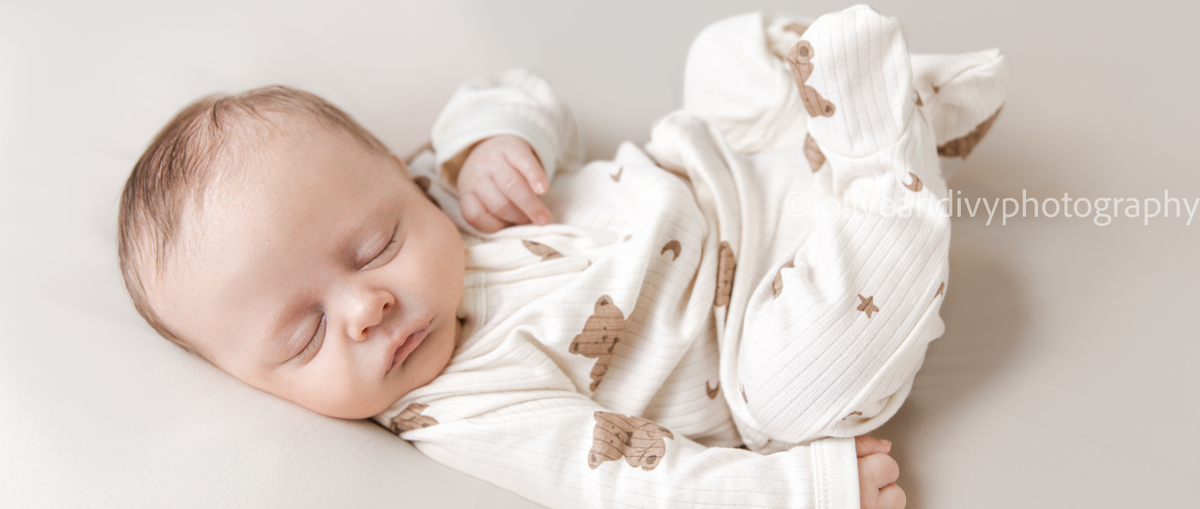
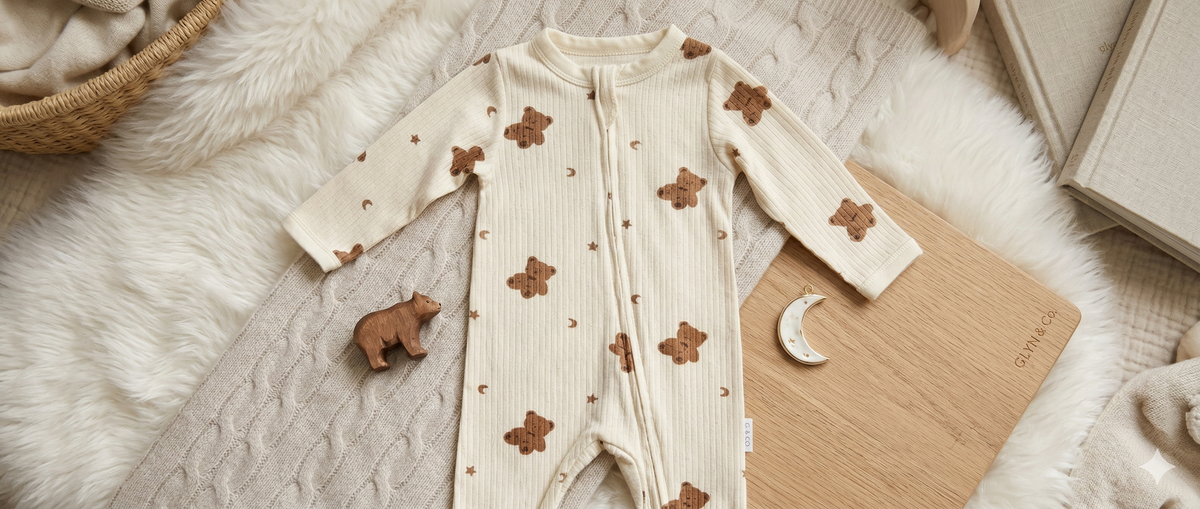
La barboteuse impeccable Velvet Heart illustre cette pensée en une seule pièce : un doux côtelé de coton certifié OEKO-TEX® Standard 100, Classe I, qui drape délicatement votre bébé et est ravissant à la maison comme en sortie. Notre barboteuse héritage signature Vintage Bloom suit la même approche réfléchie, une silhouette épurée et ajustée conçue pour conserver sa forme et sa douceur après de nombreux lavages, afin qu'une pièce bien faite puisse être transmise en douceur entre frères et sœurs. Selon notre vision, la sécurité doit opérer discrètement en arrière-plan, faisant son travail sans altérer l'atmosphère sereine de la chambre de votre bébé.
Au-delà de l'étiquette de composition
| Propriété | Ce que cela signifie | Implication pour la tranquillité d'esprit des parents |
|---|---|---|
| Une étiquette 100 % coton | Décrit la fibre dont est fait le tissu, un point de départ significatif, mais n'est pas conçue pour confirmer le profil chimique du vêtement fini. | Un bon premier signal, idéalement associé à des tests sur le produit fini. |
| Tests sur le produit fini | OEKO-TEX Standard 100 teste le vêtement complet, y compris le tissu de base et les fils à coudre, par rapport aux valeurs limites pour les substances préoccupantes. | Reflète le tissu tel qu'il est lorsque votre bébé le porte. |
| Classe I, le niveau le plus strict | Applique les valeurs limites les plus basses de la norme, spécifiquement définies pour les textiles destinés aux bébés et aux jeunes enfants. | Les seuils les plus conservateurs offerts par la norme, adaptés à la peau délicate des nourrissons. |
| Poids et élasticité du tissu | Un tissu côtelé substantiel de 180 g/m² avec une élasticité mécanique naturelle grâce à des colonnes alternées, plutôt qu'une forte proportion d'élastique synthétique. | Une couche confortable et durable avec un ajustement qui retrouve sa forme. |
| Gamme GLYN & CO. | Essentiels 100 % coton et collection Canvas 95 % viscose de bambou, 5 % spandex, tous deux certifiés OEKO-TEX® Standard 100, Classe I. | Tests sur le vêtement fini pour la couche la plus proche de votre bébé, décrits honnêtement. |
Réponses rapides
Pourquoi regarder au-delà d'une étiquette 100 % coton lors du choix des vêtements pour bébé ?
Une étiquette 100 % coton décrit la fibre, mais pas ce qui s'est passé pendant la fabrication. La certification indépendante des vêtements finis telle que OEKO-TEX Standard 100, Classe I teste la pièce complète par rapport à des valeurs limites strictes, répondant à une question à laquelle une étiquette de composition n'est pas conçue pour répondre.
- Une étiquette décrit la fibre : 100 % coton indique l'origine de la fibre, un point de départ significatif, et non le profil chimique du vêtement fini.
- La certification teste la pièce finie : OEKO-TEX Standard 100 examine le vêtement complet, y compris le tissu de base et les fils à coudre, par rapport aux valeurs limites des substances préoccupantes.
- La Classe I est le niveau le plus strict : Elle applique les valeurs limites les plus basses de la norme, définies spécifiquement pour les articles destinés aux bébés et aux jeunes enfants.
Une dernière note de GLYN & CO.
Une chambre d'enfant peut être un sanctuaire tranquille au milieu du rythme effréné du monde moderne. Nous pensons que les premiers mois de la vie de votre bébé sont une fenêtre précieuse et éphémère, et les couches douces que vous placez contre sa peau méritent d'être choisies avec soin. Notre engagement envers les tests indépendants est l'une des façons dont nous essayons de simplifier ce choix, afin que le tissu le plus proche de votre bébé soit un tissu en lequel vous pouvez avoir confiance, et que votre maison puisse se sentir un peu plus calme.
La philosophie de GLYN & CO. est une invitation à ralentir et à faire confiance à votre propre intuition de ce qui convient le mieux à votre famille. Vous apportez une sagesse tranquille à la prise en charge de votre enfant, une sagesse qui valorise la qualité durable et le design honnête plutôt que les tendances passagères. Enveloppez votre bébé dans nos essentiels en coton certifié pour une couche douce, respirante et testée indépendamment, dans des tons calmes et neutres. Accueillons le luxe discret d'un design intentionnel et créons un espace paisible où le confort et le calme passent avant tout.