Why Long-Staple Cotton Feels Softer Against a Baby's Skin
The quality of the cotton fibre at the heart of a baby garment shapes how soft, smooth, and lasting that garment feels against delicate skin. For a newborn, touch is one of the main ways they meet the world, so the fabrics resting against their skin are worth choosing with care. A baby's skin is still developing through the early months, adapting to changes in temperature, the feel of clothing, and a new environment. Within the intentional lifestyle persona of GLYN & CO., our design philosophy holds that the fabrics closest to this delicate skin should be chosen thoughtfully, favouring a slow, soft, and intentional approach to materials over the hurried compromises of rushed production. By exploring the archive of The GLYN Journal, parents can discover the thinking behind our material choices, and why something as simple as the length of a cotton fibre can make a real difference to how a garment feels.
A newborn's skin is gentler and more delicate than an adult's, which is part of why a smooth, soft contact surface matters so much. Clinical evidence from clinical histological studies of infant epidermis development indicates that the outer layer of newborn skin is less developed than a fully matured adult's, leaving it more sensitive to its surroundings. The individual skin cells that form the outer layer are smaller and arranged less tightly together in early infancy, and the natural lipid matrix that helps hold them together is still organising itself. Because this outer layer is more delicate, a soft, smooth fabric simply feels more comfortable against it than a rough or coarse one, which is exactly what good fibre selection sets out to achieve.
The outer layer of the skin also acts as the body's natural surface barrier. Extensive peer-reviewed research on neonatal skin barrier function demonstrates that infant skin tends to lose water more readily than mature adult tissue, because its natural protective layers are still developing. A soft, smooth fabric is gentle against this developing barrier, helping keep the skin's immediate environment comfortable. Choosing a smooth, well-made cotton is a simple, practical way to make the daily experience of being dressed more comfortable for your baby.
A baby's skin gradually settles into its own natural balance over the first weeks of life, sometimes described as the development of the acid mantle, moving from a near-neutral surface toward a slightly acidic one. A gentle, breathable, comfortable fabric supports the calm environment a baby is most comfortable in. Our current collections use premium cotton with simple finishing, favouring the natural feel of the fibre rather than heavy treatments, which helps the fabric stay soft and gentle against your baby's skin.
Here is where fibre length comes in. Long-staple cotton fibres typically measure between thirty-two and thirty-eight millimetres in length, noticeably longer than conventional short-staple fibres, which often average less than twenty-four millimetres. When shorter fibres are spun into yarn, more loose fibre ends tend to project outward from the thread, creating a slightly rougher surface across the finished fabric. Longer fibres, by contrast, allow for a smoother, more cohesive yarn with fewer projecting ends, which is part of why long-staple cotton has a softer, more lustrous hand-feel. For a fabric that sits against a baby's skin all day, that smoothness is a meaningful, tangible benefit.
Fibre length also affects how well a fabric lasts. Long-staple cotton fibres allow for a more cohesive yarn because the longer strands overlap over a greater distance within the thread, which helps the fibres hold together when the fabric is washed and worn. Shorter-fibre fabrics are more prone, over repeated washing, to fibre migration, where short ends work their way to the surface and form small bundles, known as pills. Pilling makes a fabric feel rougher over time. A long-staple cotton resists this, helping a garment stay smooth and soft through many wash and wear cycles, which is exactly the kind of lasting quality we design for.
A smooth, long-staple fabric simply glides more gently against the skin than a pilled, rough one. As a fabric becomes pilled and coarse, it feels less comfortable against delicate skin. Our material sourcing focuses on premium long-staple fibres precisely to keep that contact surface smooth and soft, so the fabric stays gentle against your baby's skin wear after wear. It is a quiet detail, but it is one of the things that makes a well-made garment feel different from a hurried one.
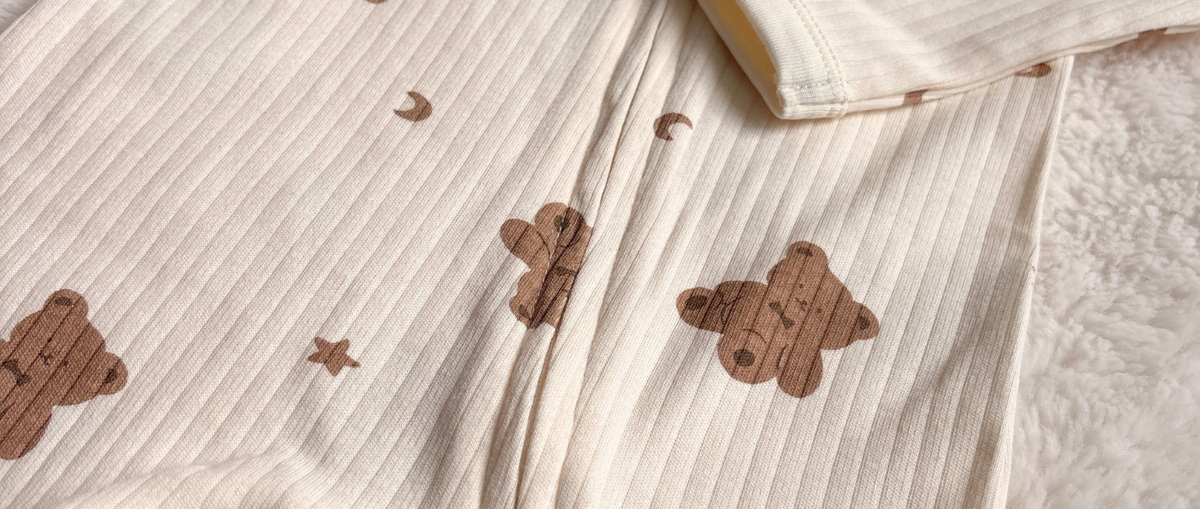
The geometry of the knit matters too. GLYN & CO. uses a rib-knit construction characterised by alternating face loops and purl loops set in vertical columns. This three-dimensional structure lets the fabric stretch and recover like a gentle accordion, giving comfortable widthwise flexibility through the knit itself rather than relying on added synthetic elastic. By building stretch into the loop geometry of our certified cotton, our signature curated rompers allow freedom of movement while keeping a soft, breathable surface against the body.
The small channels of air formed within the vertical valleys of a ribbed knit also help with comfort and warmth. As noted in clinical data regarding neonatal skin physiology and thermal dynamics, newborns have a limited ability to regulate their own body temperature, so a comfortable, breathable layer is a genuine help. The gentle air pockets within the ribbed columns of our cotton act as a natural, breathable insulator, helping a baby stay comfortably warm during cooler moments while still letting warmth and humidity escape as the room warms up.
Breathability is the goal here, and it is something an open, porous natural fibre does well. When a fabric is breathable, moisture vapour can move away from the body rather than sitting against the skin. Our premium long-staple cotton has a naturally open, porous structure that lets vapour escape, helping keep the layer next to the body comfortable and dry. A dry, breathable microclimate is simply more comfortable for a baby through long stretches of sleep and play, which is what our knit is designed to support.
Independent testing is how we give families confidence about what is in the fabric. The current signature collections of GLYN & CO. are made using premium cotton certified to OEKO-TEX® Standard 100, Class I, the strictest tier of the standard, which sets the lowest limit values for substances of concern in items intended for babies. Testing finished garments to this standard means our softness comes from the quality of the fibre and the knit, not from heavy surface treatments. This independent verification takes the guesswork out of fabric choice, so you can build a nursery wardrobe around materials that have been independently tested.
Looking ahead, our newly launched Canvas Collection introduces a custom-developed fabric of 95% bamboo viscose and 5% spandex, knit into a heavy-density 230 GSM interlock. Bamboo viscose is a plant-derived fibre prized for its softness and fluid drape, and the small amount of spandex gives the garment shape retention and recovery for daily active wear. Like the rest of our range, the Canvas Collection is certified to OEKO-TEX® Standard 100, Class I. This thoughtful blend keeps its shape rather than sagging, supporting a wardrobe that lasts and reflecting the slow-living philosophy behind everything we make.
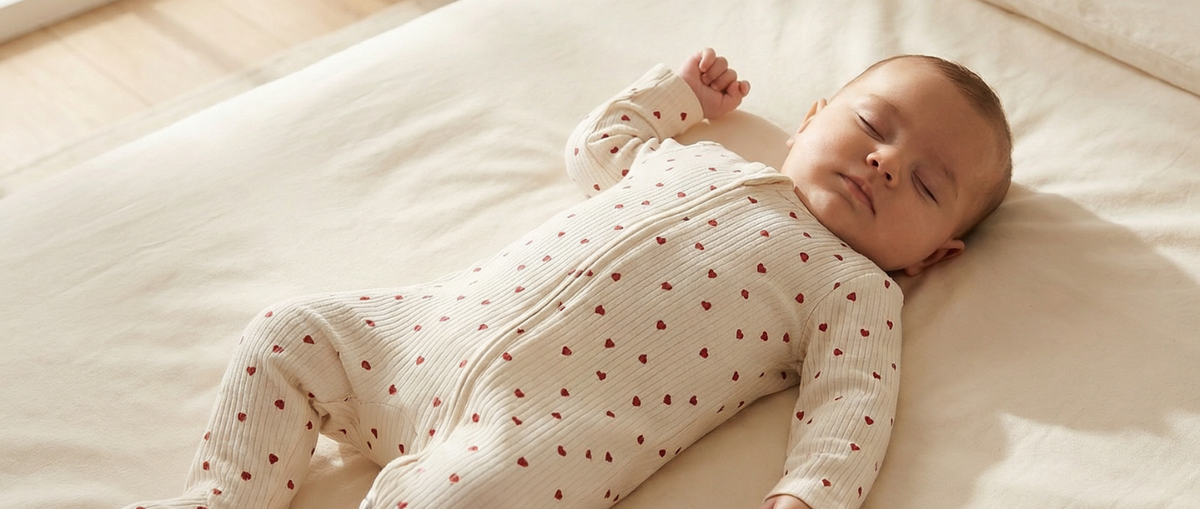
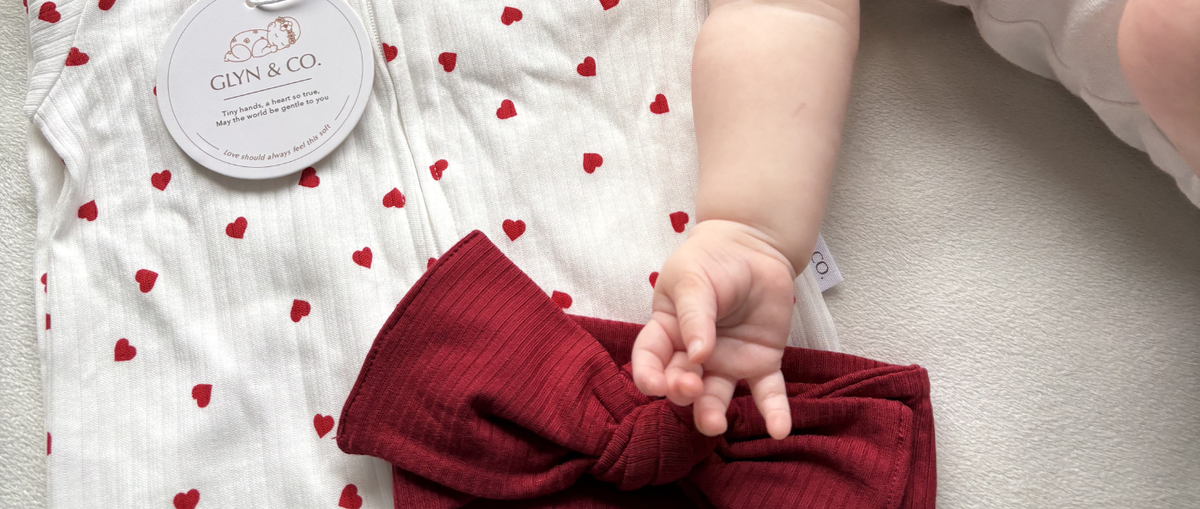
The pristine Velvet Heart Romper shows how premium long-staple cotton translates into everyday comfort. Made in our 180 GSM rib knit, it offers a soft, substantial hand-feel without synthetic resins, with long-staple fibres spun to keep the yarn soft and breathable. Reinforced flat-lock seams help keep the inside smooth against a baby's limbs during sleep. Our signature heirloom Vintage Bloom Romper is knit from premium long-staple cotton that has been combed to remove shorter fibres, leaving an exceptionally smooth, lustrous finish that resists pilling over time. Both feel soft and gentle against newborn skin, wash after wash.
The cumulative effect of thoughtful textile choices is a calm, considered nursery and a comfortable baby. When a child is dressed in soft, breathable fabrics that feel gentle and do not overheat, they tend to feel more comfortable, which can support settled sleep and peaceful waking, and a more relaxed home for everyone. Choosing materials with care is one small, lovely way to make the early days a little gentler. The science of textiles and the art of nurturing meet here, in the simple choice of a soft, well-made fabric.
Material Property Comparison
This matrix outlines the engineering and comfort characteristics of GLYN & CO. premium long-staple ribbed cotton alongside other common textile options.
| Property | Material & Engineering Detail | Parent Peace of Mind Implication |
|---|---|---|
| GLYN & CO. Long-Staple Ribbed Cotton | Combed long-staple fibres exceeding 32mm, spun into a 180 GSM 6x2 rib knit. Certified to OEKO-TEX® Standard 100, Class I. | A smooth, soft, breathable layer chosen for comfort against delicate skin, independently tested for substances of concern. |
| Short-Staple Cotton | Shorter fibres (often under 24mm) with more projecting fibre ends, more prone to pilling over repeated washing. | Tends to feel rougher over time as pilling develops, which is less comfortable against delicate skin. |
| High-Spandex Blends | Synthetic elastic fibres offer high stretch but lower moisture-vapour permeability, so they breathe less than natural fibres. | Less breathable next to the skin; we prefer natural mechanical stretch for everyday comfort. |
| GLYN & CO. Bamboo Viscose Blend | 95% bamboo viscose with 5% spandex, knit into a 230 GSM interlock for softness and shape recovery. Certified to OEKO-TEX® Standard 100, Class I. | A soft, fluid, breathable layer that keeps its shape, independently tested for substances of concern. |
In Short
Why does long-staple cotton feel softer against a baby's skin than conventional cotton?
Long-staple cotton feels softer because its longer fibres spin into a smoother, more cohesive yarn with fewer projecting ends, giving a smoother fabric surface that resists pilling and stays gentle against a baby's delicate skin over time.
- Smoother surface: Combed long-staple fibres have fewer protruding ends, giving an ultra-smooth, soft hand-feel that suits delicate newborn skin.
- Breathable, comfortable knit: A high-GSM vertical rib geometry provides natural stretch and gentle air channels, supporting comfort and warmth without synthetic elastic.
- Independently tested: Certification to OEKO-TEX® Standard 100, Class I offers documented reassurance about the chemical safety of the fabric closest to your baby.
A Closing Note from GLYN & CO.
The modern world is full of loud, urgent demands, urging us to consume faster and fill our homes with the temporary and the disposable. In the middle of that noise, the nursery can be a quiet sanctuary, a space where time slows to a gentle pace. As you hold your child close and listen to the soft rhythm of their breath, the materials you choose to place against their skin can reflect that same quiet care. We believe true luxury lies in simplicity and lasting quality, not in quantity.
The fabrics created by GLYN & CO. are designed to honour this slow, soft life, offering a tactile experience that is gentle and considered. By favouring smooth, long-staple cotton and thoughtful knit construction, we invite your child to rest in genuine comfort, the kind of physical ease that helps a baby settle. Trust your own instincts during these fleeting early years. Your child does not need a nursery full of things, but a calm, considered space where they can grow in comfort. Let us embrace the quiet elegance of slow living, and create a peaceful place where both you and your child can thrive.