Why Bamboo Pills (And Cotton Doesn't): A Guide to Fabric Care for Baby Clothing
If you have ever pulled a soft bamboo romper out of the wash and noticed tiny balls of fibre forming on the surface, you are not alone, and nothing has gone wrong. Pilling is one of the most common questions parents have about bamboo baby clothing, and it often arrives with a small worry: is the fabric poor quality, or did I wash it wrong? The reassuring answer is that pilling is a normal property of how certain fibres behave, not a sign of a defect. Understanding why it happens, and a few simple ways to care for bamboo fabric, makes it easy to keep these soft pieces looking lovely for longer. This guide explains what pilling actually is, why bamboo viscose tends to pill more than cotton, whether it signals lower quality, and exactly how to wash and care for both fabrics so they stay soft and comfortable.
What pilling actually is
Pilling is a surface effect that happens to almost every kind of fabric over time, from wool sweaters to cotton sheets to bamboo viscose baby clothes. A pill is a small, tangled ball of fibre that forms on the surface of a textile. It develops through a simple mechanical process: as a fabric rubs against itself, against skin, or against other items in the wash, the ends of individual fibres are gradually worked loose from the yarn. Those loose fibre ends do not fall away cleanly. Instead, they tangle together with neighbouring loose ends, and friction rolls them into the small, firm bobbles we recognise as pills.
Three things drive how much a fabric pills: the type of fibre, how the yarn is spun, and how much friction the fabric encounters in daily use and laundering. Friction is the trigger, which is why pills tend to appear in high-contact areas first, the inside of cuffs, the back where a baby rests against a car seat or mattress, and anywhere the fabric rubs repeatedly. This is also why washing matters so much: a rough wash cycle, or being tumbled alongside abrasive items like towels or zippers, dramatically increases the friction a delicate fabric experiences. Pilling, in other words, is largely a story about friction meeting fibre, and it is something you can influence with how you launder and care for a garment.
Why bamboo pills more than cotton
Different fibres behave differently, and that is the heart of why bamboo viscose and cotton handle pilling in their own ways. Neither is better or worse; they are simply built differently, and those differences show up in everyday wear.
Bamboo viscose is a regenerated cellulose fibre, valued for its exceptional softness and fluid, silky drape. That softness comes in part from how fine and smooth the individual filaments are. Finer, smoother fibres create the gentle hand-feel that makes bamboo viscose so pleasant against skin, but they also tend to work loose from the yarn surface a little more readily under friction, and once loose they tangle easily. The same qualities that make bamboo viscose feel so soft also make its surface a touch more prone to pilling.
Cotton fibres, by comparison, are generally coarser and have a naturally textured, slightly twisted structure. Long-staple cotton in particular is spun from longer fibres that overlap over a greater distance within the yarn, which helps them stay anchored in place rather than migrating to the surface. This is why a well-made cotton knit often resists pilling more stubbornly than a fine bamboo viscose. It is not that cotton is a higher-grade material; it is that its fibre structure simply behaves differently under the same friction.
It is also worth being clear about the word bamboo itself. Most bamboo clothing, including ours, is more accurately described as bamboo viscose: the bamboo plant is processed into a soft, regenerated cellulose fibre. This is the correct way to describe it, and it is why the fibre feels so silky rather than coarse like a raw plant fibre would. So when we talk about bamboo pilling, we are really talking about how a fine, smooth, regenerated fibre behaves, which is different from how a coarser natural cotton fibre behaves. Different fibres, different qualities, different care.
Does pilling mean lower quality
This is the question most parents are really asking, and the honest answer is no. Pilling is a property of the fibre type, not a verdict on the garment's quality or how it was made. A beautifully made, premium bamboo viscose piece can still develop some surface pilling, precisely because the softness that makes it lovely also makes the fibre surface more mobile. Pilling and quality are simply two different things.
In fact, some of the qualities people most love in bamboo, its silky softness and fluid drape, come from the very fibre characteristics that make a little pilling more likely. Expecting a soft bamboo viscose fabric to behave exactly like a sturdy cotton canvas is a bit like expecting silk to wear like denim; they are different materials with different strengths. A good way to think about it is that pilling is a maintenance consideration, not a flaw. With the simple care steps below, pilling can be kept to a minimum, and any pills that do form can be removed easily, leaving the fabric soft and smooth again.
What does signal quality in a baby garment is the things you can rely on: how the piece is constructed, how it is finished, and whether it has been independently tested for safety. Our Canvas Collection, for instance, is made from a precise 95% bamboo viscose and 5% spandex blend, and like the rest of our range it is certified to OEKO-TEX® Standard 100, Class I. If you would like to understand what that certification actually means, we explain it plainly in our guide to certified fabrics, explained without the noise. Those are the markers worth focusing on, rather than whether a soft fibre ever forms a pill.
How to care for bamboo to minimise pilling
The good news is that pilling is largely within your control, because friction is the main cause and gentle laundering reduces friction dramatically. A few simple habits go a long way toward keeping bamboo viscose pieces soft and smooth.
Wash in cold water on a gentle or delicate cycle. Cold water and a slower spin reduce the mechanical stress on the fibres, which is the single biggest thing you can do to limit pilling. Hot water and vigorous cycles agitate the fabric more, loosening fibre ends faster.
Use a mesh laundry bag. Placing bamboo pieces inside a mesh wash bag is one of the most effective steps you can take. The bag shields the garment from rubbing against other items and against the drum, cutting down the friction that causes pills in the first place.
Separate soft fabrics from rough ones. Wash bamboo baby clothes away from towels, denim, and anything with zippers, hooks, or Velcro. Abrasive companions in the wash are a common cause of pilling, so keeping delicate pieces together protects their surface.
Use a gentle detergent and skip fabric softener. A mild detergent is kinder to fine fibres, and fabric softeners can leave residues that do little for an already-soft fabric. Less is more with delicate bamboo viscose.
Dry gently. Air drying is ideal for bamboo viscose, as it avoids the tumbling friction and heat of a dryer entirely. If you do use a dryer, choose a low or no-heat setting and remove the pieces while slightly damp. High heat and heavy tumbling are hard on fine fibres.
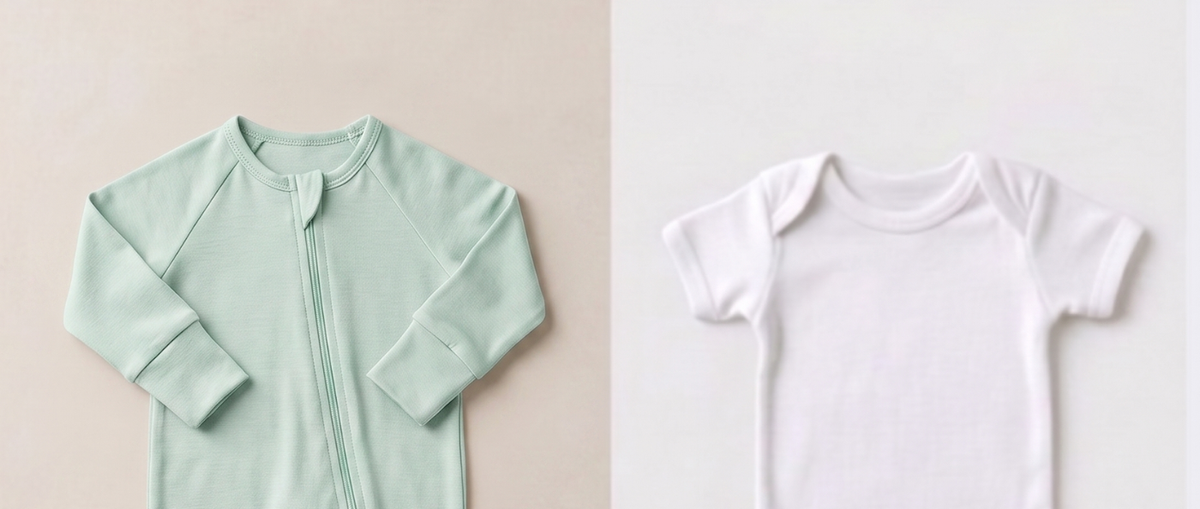
And if pills do appear, they are easy to remove. A fabric shaver or a gentle pass with a fabric comb lifts pills away cleanly, restoring the smooth surface. This is normal, occasional upkeep rather than a repair. Our newly launched Canvas Collection, made from soft 95% bamboo viscose with 5% spandex, responds beautifully to this kind of gentle care; you can see the pieces, including the Canvas Mint romper and the Canvas Mauve romper, on their product pages. Browse the full collection of our signature curated rompers to find the tones that suit your nursery.
Cotton care, for comparison
Cotton has its own character when it comes to care, and it is helpful to understand the difference if your baby's wardrobe includes both fabrics. Cotton is generally more durable and lower-maintenance than fine bamboo viscose, thanks to its coarser, more anchored fibre structure. It tends to tolerate warmer washes and more robust handling, and a well-made long-staple cotton knit often resists pilling well over time.
That said, gentle care still rewards any fabric. Washing cotton baby clothes in cool or warm water on a normal cycle, using a mild detergent, and drying on low heat will keep them soft and help them hold their shape and colour for longer. Our foundational essentials are made from 100% cotton in a soft 180 GSM rib knit, and they are forgiving, everyday pieces. Neither fabric is the right answer for everyone; cotton and bamboo viscose simply suit different preferences and different moments, and both can last beautifully with a little care.
Quick Answers
Common questions about bamboo baby clothing care
Is pilling a sign of bad quality? No. Pilling is a normal property of how soft, fine fibres like bamboo viscose behave under friction, not a defect or a sign of poor manufacturing. The same softness that makes bamboo viscose feel lovely also makes a little surface pilling more likely, and it can be minimised with gentle care.
How should I wash bamboo baby clothes? Wash them in cold water on a gentle cycle, ideally inside a mesh laundry bag, separated from rough items like towels and zippers. Use a mild detergent, skip fabric softener, and air dry or use low heat to keep the fabric soft and smooth.
Can I put bamboo clothing in the dryer? Air drying is best for bamboo viscose, as it avoids the friction and heat that loosen fine fibres. If you do use a dryer, choose a low or no-heat setting and remove the pieces while slightly damp.
How often should I wash bamboo baby clothes? Wash them when they need it rather than after every brief wear, since each wash adds some friction. Spot-cleaning small marks between washes can help pieces stay fresh while reducing how often they go through a full cycle.
How do I remove pills once they form? A fabric shaver or a gentle fabric comb lifts pills away cleanly and restores the smooth surface. This is simple, occasional upkeep, and it does not damage a well-made fabric.
A Closing Note from GLYN & CO.
Caring for a baby's clothes is one of the small, quiet rhythms of early parenthood, and understanding your fabrics makes it simpler and more rewarding. Pilling is just part of how soft fibres behave, and with a gentle wash and the occasional pass of a fabric comb, your bamboo viscose pieces will stay soft and lovely for a long time. At GLYN & CO., we make our pieces in Canada and certify them to OEKO-TEX® Standard 100, Class I, the strictest tier of the standard, so the layer closest to your baby is independently tested and chosen with care. Whether you reach for soft cotton or fluid bamboo viscose, a little gentle care helps both last beautifully, the way thoughtfully made things should.