Why Natural-Fibre Baby Clothing Belongs in a Calm Nursery
The making of a calm, considered nursery is one of the first quiet joys of preparing for a new baby, a chance to shape the space where your child will spend so many of their early hours resting and growing. Within the intentional lifestyle persona of GLYN & CO., we think of a nursery not only as a styled room but as a gentle, considered environment, one where light, air, texture, and the fabrics your baby wears all contribute to a feeling of ease. As you arrange furniture and choose soft clothing layers, it is natural to think about the materials you bring into the room, and about why natural fibres have such an enduring place in a baby's wardrobe. This guide explores the simple appeal of natural-fibre baby clothing and how it fits a calm, considered home. If you enjoy this kind of thinking, exploring the archive of The GLYN Journal offers more on materials, craftsmanship, and the slow-living philosophy behind everything we make.
Natural fibres have been chosen for baby clothing for generations, and for good reason. Cotton and other plant-derived fibres are naturally breathable and absorbent, qualities that make them comfortable against delicate skin through the day and night. They take up and release moisture readily, helping the fabric stay soft and comfortable rather than damp. They feel gentle to the touch, they wash well, and they carry a quiet, timeless quality that suits a considered nursery. When you choose natural-fibre clothing, you are choosing materials whose comfort and feel have stood the test of time, which is exactly why they sit at the heart of our collections.
Synthetic fibres such as polyester and nylon are engineered for durability and low cost, and they have their place in many garments. For a baby's everyday wardrobe, though, we simply prefer the feel and breathability of natural fibres. Plant-derived fabrics tend to handle moisture and warmth in a way that feels gentle and comfortable against young skin, and they carry the soft, natural texture we want in our pieces. This is a design choice rooted in comfort and feel, not a verdict on any other product. We focus on doing one thing well: making soft, breathable, beautifully finished baby clothing from materials we believe in.
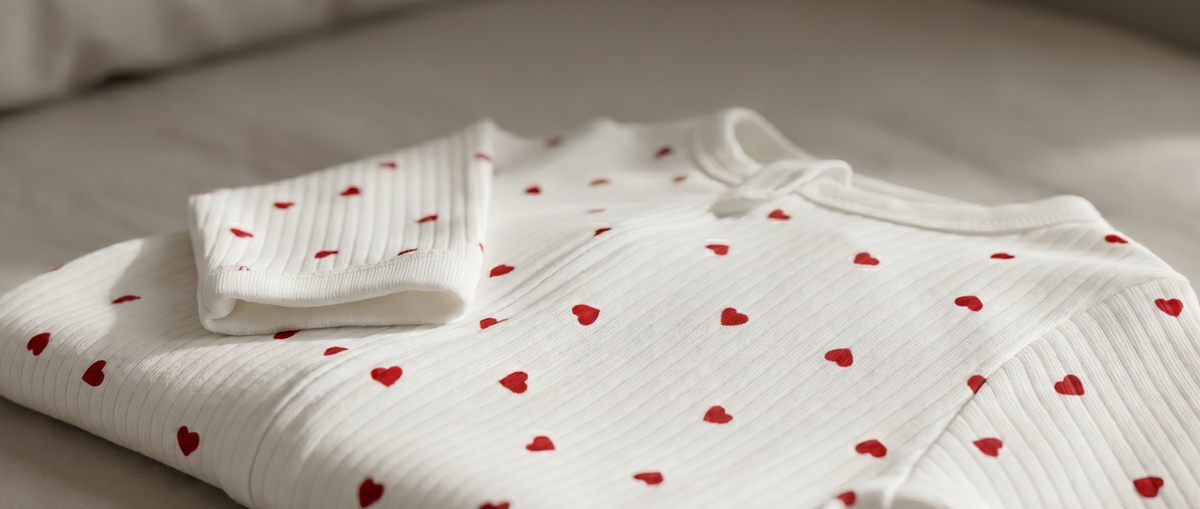
Our foundational essentials are made from a premium 100% cotton, knit into a high-density 180 GSM, 6x2 premium rib that gives the fabric a lovely body and softness. Every piece within this signature collection, including the Moon Bear Romper, the pristine Velvet Heart Romper, and our signature heirloom Vintage Bloom Romper, features integrated footies to keep tiny limbs comfortably covered. To complete these outfits with quiet harmony, two coordinating accessories sit alongside them, the Sage Rib Bow made to accompany the Vintage Bloom Romper, and the Ruby Rib Bow crafted to match the Velvet Heart Romper. Every piece is certified to OEKO-TEX® Standard 100, Class I, the standard's strictest tier, which sets the lowest limit values for substances of concern in items intended for babies. We describe our pieces honestly, which means we do not call this current cotton stock organic, and we do not claim it uses materials it does not contain, such as copper snaps.
A newborn's skin is still developing through the early phase of life, which is part of why the fabric resting against it is worth choosing thoughtfully. According to published clinical histological studies of infant epidermis development, the outermost layer of a newborn's skin is less developed than mature adult tissue, with skin cells that are smaller and less tightly knit together. Because this outer layer is less dense, it is more delicate than an adult's. This is one of the clearest reasons we test our fabrics to OEKO-TEX® Standard 100, Class I limits, so the layer closest to your baby is one you can feel settled about.
A newborn's natural moisture barrier also works within real biological limits during the first year. That barrier behaves a little like a gentle protective glue, using a delicate matrix of natural oils and fats to hold the young skin cells together like mortar between bricks. As demonstrated in peer-reviewed research on neonatal skin barrier function, infant skin tends to lose water more readily because this natural oil layer is still organising itself. A soft, breathable, absorbent fabric helps keep the skin's immediate environment comfortable, which is one of the simple, practical things good baby clothing can do. Choosing a gentle, well-made layer is a kind, easy way to support your baby's comfort through long stretches of sleep or play.
A baby's skin gradually settles into its own natural balance over the first weeks of life, sometimes described as the development of the acid mantle, which in turn supports the healthy development of the skin's microbiome. At birth the surface sits closer to neutral, gradually moving toward a slightly acidic range over the initial weeks. A dry, breathable, comfortable layer simply supports the calm environment a baby is most comfortable in. This is part of why we design our fabrics to be soft and breathable, and why we keep our finishing simple rather than relying on heavy treatments.
Newborn thermoregulation means a baby's clothing is, in a real sense, a daily partner in keeping them comfortable. According to clinical guidance on the physiological mechanics of newborn thermoregulation, infant temperature control is less developed than an adult's, in part because babies cannot yet shiver to generate warmth and have a larger surface area relative to their body mass. This means a baby can lose warmth more quickly than an adult when the environment changes. A comfortable, breathable layer that holds gentle warmth without trapping dampness helps a baby stay settled, which is exactly what a well-made natural-fibre garment is designed to do.
A breathable fabric supports a comfortable microclimate next to the skin, helping a baby stay comfortably warm during cooler moments while still letting humidity escape as the surroundings warm up. As discussed in clinical data regarding neonatal skin physiology and thermal dynamics, a comfortable, well-insulated layer helps a baby stay settled, so more of their energy stays available for growth and rest. Our substantial 180 GSM cotton and 230 GSM interlock weaves are designed to offer that gentle, breathable warmth, the kind of comfortable layer that suits a calm nursery.
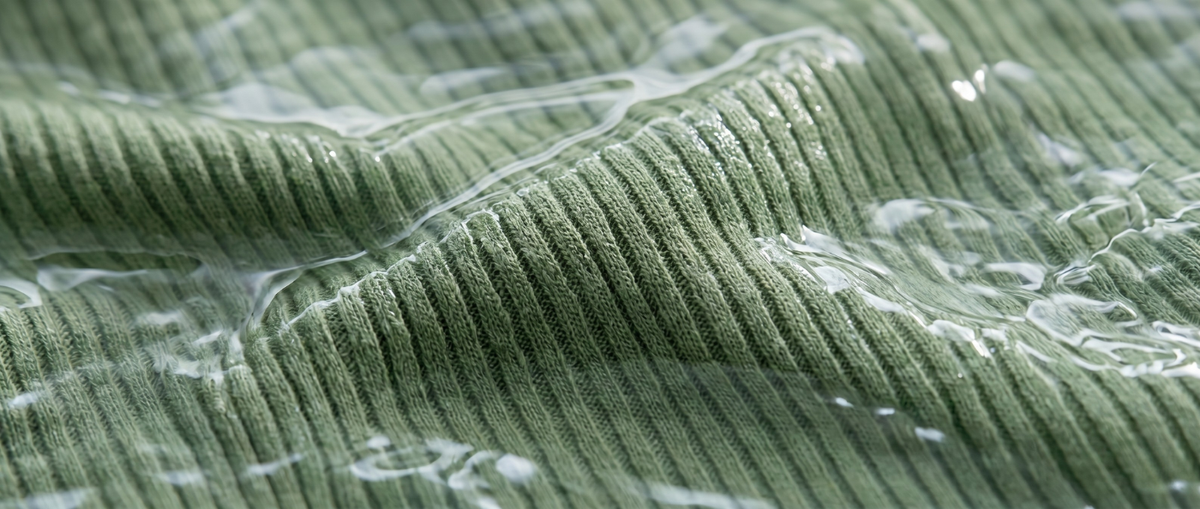
Our foundational essentials use 100% cotton, certified to OEKO-TEX® Standard 100, Class I, knit into our signature 6x2 rib for a soft, breathable hand-feel. For families drawn to an even softer, more elevated layer, our newly launched Canvas Collection, which we call "The Silk Edit," brings a fluid, buttery drape to the same calm aesthetic. The Canvas pieces are made from 95% bamboo viscose and 5% spandex, knit into a heavy-density 230 GSM interlock for softness and gentle structure.
Bamboo viscose is a plant-derived fibre prized for its softness and fluid drape; you can read more about how bamboo fibre is studied and characterised in the materials literature. To give the garment shape retention and recovery for daily active wear, we include a minimal 5% spandex content in the yarn. This small amount of spandex helps the pieces keep their shape rather than sagging and being discarded prematurely, supporting a wardrobe that lasts. Like the rest of our range, the Canvas Collection is certified to OEKO-TEX® Standard 100, Class I.
The Canvas Collection includes premium functional details designed to ease everyday parenting. Each romper features colour-matched zippers that blend quietly into the silhouette, integrated fold-over hands and mitts to help cover tiny fingers, and anti-slip grips on the feet for sizes 12 to 18 months and 18 to 24 months to support steady early steps. It arrives in two solid, sophisticated colourways: Canvas Mint, a soft green available in a romper, beanie, and sleep sack, and Canvas Mauve, a muted, dusty purple available in a romper, headband, and sleep sack. We have also shared with our community that a custom-printed chapter of this collection, Phase 2, is on the horizon, inviting families into a shared journey of continuous material refinement.
When you dress your baby in the Velvet Heart Romper or our signature heirloom Vintage Bloom Romper, you are choosing a 180 GSM cotton layer knit to stay soft and resist pilling. We keep our finishing simple, favouring the natural feel of the fibre over heavy treatments, so the fabric keeps its soft, breathable character wash after wash. This is the kind of considered, durable quality we believe in, pieces made to last and to feel lovely against your baby's skin across the seasons. You can browse the full range of our signature curated rompers to find the tones that suit your nursery.
Natural-Fibre Baby Clothing, at a Glance
| Property | Material & Engineering Detail | Parent Peace of Mind Implication |
|---|---|---|
| Natural Fibre Content | Foundational essentials in 100% cotton; Canvas Collection in 95% bamboo viscose with 5% spandex for shape recovery. | A soft, breathable, naturally absorbent layer chosen for comfort against delicate skin. |
| Breathability & Comfort | Natural fibre structures that take up and release moisture vapour, supported by the open channels of the 6x2 rib. | Helps keep the skin's surface comfortable and dry through the day and night. |
| Elasticity & Shape Recovery | Foundational essentials use natural mechanical loop stretch; Canvas items use a minimal 5% spandex content for shape recovery. | Allows comfortable movement and helps garments keep their shape through everyday wear. |
| Material Longevity | Substantial fabric weights (180 GSM and 230 GSM) that resist thinning and pilling across continuous laundry cycles. | Helps pieces keep a clean, tailored look and supports a lasting capsule wardrobe. |
| Independent Safety Testing | Certified to OEKO-TEX® Standard 100, Class I, the strictest tier, with the lowest limit values set for substances of concern in textiles intended for babies. | Offers documented, independent reassurance about the chemical safety of the fabric closest to your baby. |
The Quick Answer
Why do many parents choose natural-fibre clothing for a baby's everyday wardrobe?
Many parents choose natural-fibre baby clothing because fibres such as cotton are breathable, naturally absorbent, and soft against delicate skin, qualities that make them comfortable for everyday wear and well suited to a calm, considered nursery.
- Breathable and absorbent: Natural fibres take up and release moisture readily, helping the fabric stay soft and the skin's surface comfortable through the day and night.
- Gentle, lasting feel: Cotton and bamboo viscose offer a soft, natural hand-feel that washes well and keeps its character over time.
- Independently tested: Choosing fabrics certified to OEKO-TEX® Standard 100, Class I offers documented reassurance about the chemical safety of the layer closest to your baby.
A Closing Note from GLYN & CO.
The environment we build within a nursery is a quiet, continuous part of a child's early life, shaping the gentle rhythms of those first months. At GLYN & CO., we believe these early chapters deserve materials chosen with care, soft natural fibres, simple finishing, and a calm, considered approach to everything we make. The vertical lines of our signature rib knit are more than a design language; they are part of a promise of softness and quiet quality, made to feel lovely against your baby's skin.
The philosophy of GLYN & CO. is an invitation to slow down and trust your own sense of what feels right for your family. You bring a quiet wisdom to caring for your child, one that values slow living, honest craftsmanship, and considered quality. Whether you wrap your baby in our certified cotton essentials or our newly launched Canvas Collection, our aim is the same: soft, breathable, independently tested fabric that helps your little one rest and grow in comfort. Let us welcome the quiet luxury of intentional design, and create a space where comfort and calm come first.